
Table of Contents
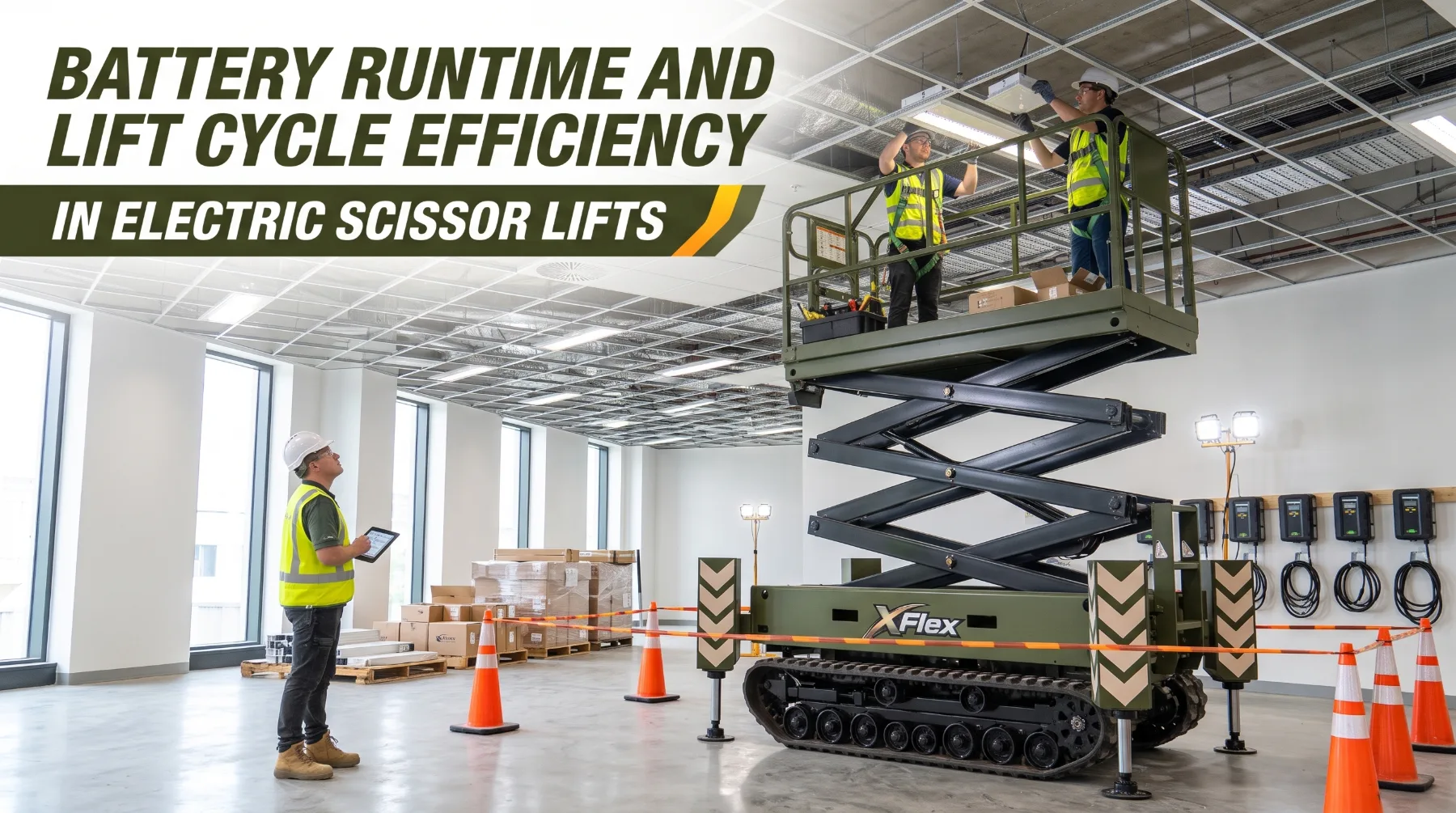
Electric scissor lifts are used daily on interior fit-outs, warehouse maintenance, ceiling installations, sprinkler and HVAC work, and facility upkeep. They operate quietly, produce no exhaust at the point of use, and let crews raise themselves, their tools, and their materials to height with precise control. All of that capability depends on one finite resource: the energy stored in the battery pack. When a lift runs low before the shift ends, the effects spread quickly. Electricians stand idle, installers wait at ground level, and project managers rearrange the day around a machine parked at the charger.
Two connected ideas determine how much work a scissor lift completes on a single charge. Battery runtime describes how long the machine can operate before it needs recharging. Lift cycle efficiency describes how effectively the machine turns that stored energy into productive raising, lowering, and repositioning. A lift with a large battery can still fall short if crews raise and lower it constantly for small adjustments. A lift with a modest battery can last the whole shift when work is sequenced well, loads are sensible, and the battery is charged and maintained correctly.
Runtime is rarely set by the battery alone. Platform load, lifting frequency, travel distance, battery age and condition, charging habits, and the temperature of the working environment all influence how long a lift stays productive. Contractors who understand these factors can choose the right machine for each job, plan work around available charge, and identify when a battery needs service. Rental fleets and facility managers benefit as well, because many runtime complaints come from avoidable operating and charging patterns rather than faulty equipment.
This guide explains what drives battery runtime and lift cycle efficiency in electric scissor lifts. It covers battery capacity and expected operating time, how repeated lift cycles consume energy, the effect of platform load, battery condition and charging practices, temperature and the working environment, and how to plan lift cycles around the work schedule.
Battery Capacity and Expected Operating Time
Nominal capacity is different from usable capacity. Lead-acid batteries, whether flooded or sealed AGM, last longer when they aren't routinely drained close to empty, so manufacturers usually recommend recharging well before full depletion. Many lifts include a battery discharge indicator, and some limit or disable the lift function when charge falls to a set level so the machine keeps enough power to lower and drive to a charger. Lithium-ion packs typically allow a deeper usable discharge and maintain steadier voltage through the shift, but they still deliver only the energy they hold.
That's why manufacturers rarely publish a single fixed runtime. Actual operating time depends on how often the platform is raised, how far and how often the machine travels, how much weight is on the platform, the battery's age and condition, and the ambient temperature. A lift used for occasional overhead inspections may run for several days between charges. The same model used for constant repositioning on a busy fit-out may need charging every evening, or even mid-shift.
When comparing machines, review the battery type, voltage, rated capacity, charger specification, and any duty-cycle information in the manufacturer's documentation. Then compare those figures against the real workload: the number of lift cycles per day, typical travel distances, and the expected platform load. This gives a far more reliable picture than an advertised runtime figure, which is usually based on a standardized test cycle that may not match your site.
Key takeaway: Battery capacity sets the energy available, but real operating time depends on usable capacity, workload, battery condition, and temperature, so evaluate the manufacturer's battery specifications against the actual job rather than relying on a single runtime estimate.
How Repeated Lift Cycles Consume Energy
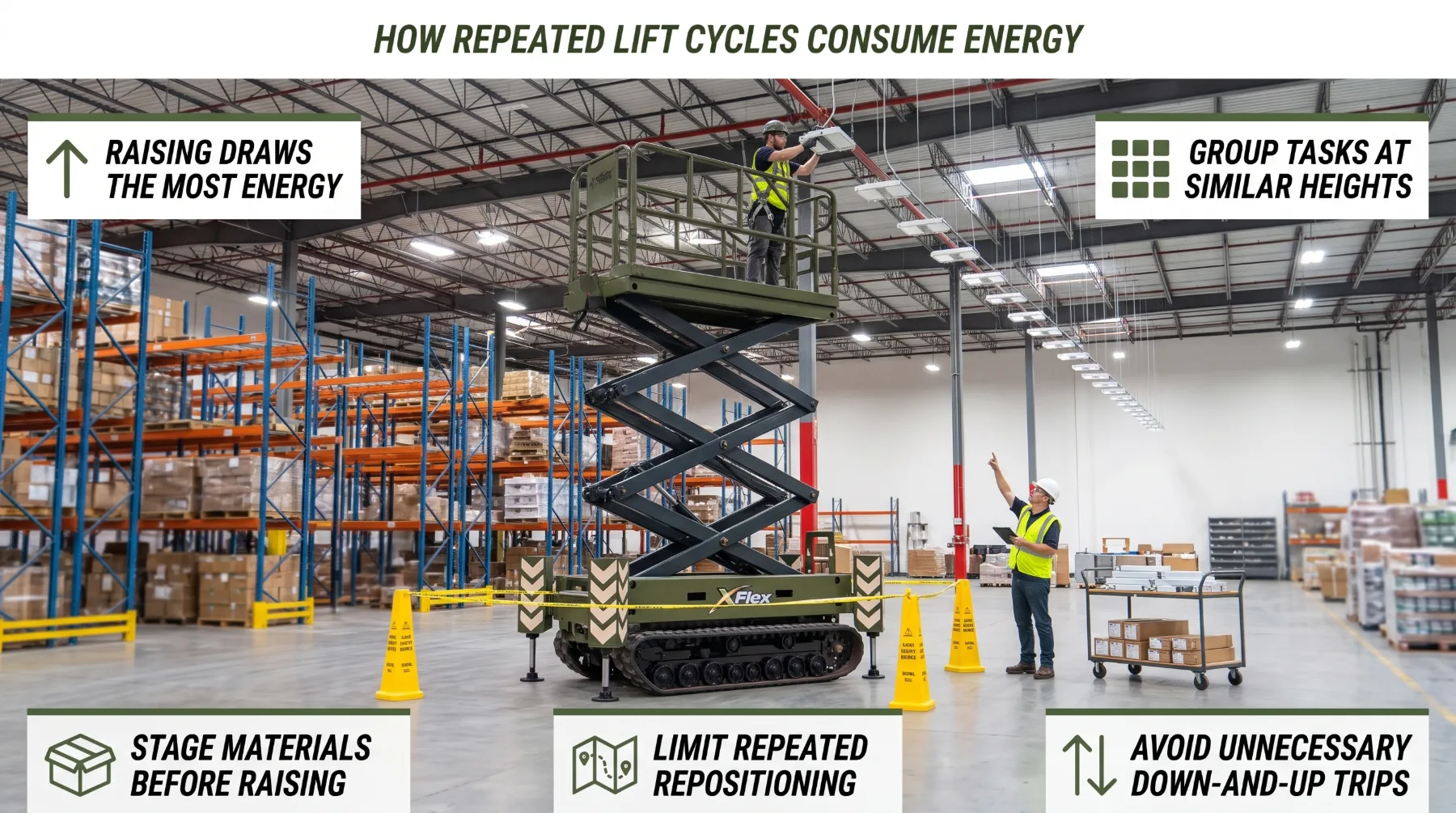
Raising the platform is usually the most energy-intensive action an electric scissor lift performs. On most models, an electric motor drives a hydraulic pump, which pushes oil into one or more lift cylinders that extend the scissor stack. Some designs use electric actuators or other mechanisms instead. Either way, the system must lift the weight of the platform, the scissor arms, and everything carried on the deck, and every raise draws a significant amount of current from the battery.
Lowering works differently. On many hydraulic scissor lifts, the platform descends under gravity as a valve releases oil back to the tank, so lowering typically consumes far less energy than raising. This difference has an important practical consequence. Every unnecessary lowering and re-raising pays the full energy cost of lifting again. An installer who drops the platform to ground level to collect one forgotten fitting, then raises it back to ceiling height, has spent nearly a full lift cycle's worth of energy for a single trip.
Small, frequent elevation adjustments also add up. Each start of the pump motor creates a brief surge in current, and dozens of short bursts across a shift can consume a meaningful share of the battery. Travel adds further demand. The drive motors use energy to move the lift between work locations, and repeated repositioning, frequent acceleration, ramps, and rough or debris-covered floors all increase consumption. Many lifts automatically reduce drive speed when the platform is elevated, so traveling at height is slower and requires careful control, but it can still reduce wasted lift cycles when the machine is approved for elevated travel and the floor is suitable.
The most effective way to improve lift cycle efficiency is to organize the work so the platform goes up once and stays there as long as it's productive. Complete all tasks within reach at a given height before lowering. Group nearby work points at similar elevations together, such as a full row of light fixtures or an entire run of cable tray. Stage tools and materials so they're already on the platform before raising. These habits reduce battery use, cut idle time, and make the workday smoother for everyone involved.
Key takeaway: Raising the platform draws the most energy while lowering often uses very little, so grouping tasks at similar heights and avoiding unnecessary down-and-up trips can significantly improve lift cycle efficiency and extend runtime.
Platform Load and Lifting Demand
Everything on the platform adds to the work the lifting system must perform. Workers, tools, fasteners, cable reels, fixtures, panels, and packaging all count toward the total load. A heavier platform requires more hydraulic pressure to raise, which means more work from the pump motor and more current drawn from the battery. Over many lift cycles, the difference between a lean, well-organized platform and an overloaded, cluttered one shows up directly in runtime.
The rated platform capacity, shown on the machine's data plate and in the operator's manual, defines the maximum combined weight the lift is approved to carry. It's paired with a maximum occupant limit, and some models list different capacities and occupant numbers for indoor and outdoor use or for extension deck configurations. These limits exist for stability and structural reasons, not energy efficiency, and they must never be exceeded. Many modern scissor lifts include load-sensing systems that prevent raising or sound an alarm when the platform is overloaded. Those systems should never be bypassed.
Overloading the platform to save trips is a false economy. It compromises stability, places excessive strain on the cylinders, pins, and scissor structure, and creates serious risk to the crew. It can also trigger overload protection mid-task, causing more delay than it saves. The better approach is to carry only what the current work requires, secure loose items so they can't fall or shift, and distribute weight according to the manufacturer's instructions rather than concentrating heavy items at one end of the deck or on the extension.
Thoughtful material planning delivers both safety and efficiency. Bring the right quantity of fixtures for the section being installed, not the whole job's supply. Return empty packaging to ground level at planned intervals rather than letting it accumulate on the deck. Use tool trays and secured containers to keep the platform organized. A lighter, tidier platform raises more efficiently, reduces fatigue for workers moving around the deck, and lowers the risk of dropped objects.
Key takeaway: A heavier platform increases lifting demand and battery use, so carry only what each task requires, secure and distribute loads correctly, and never exceed the rated capacity, occupant limit, or bypass overload protection.
Battery Condition and Charging Practices
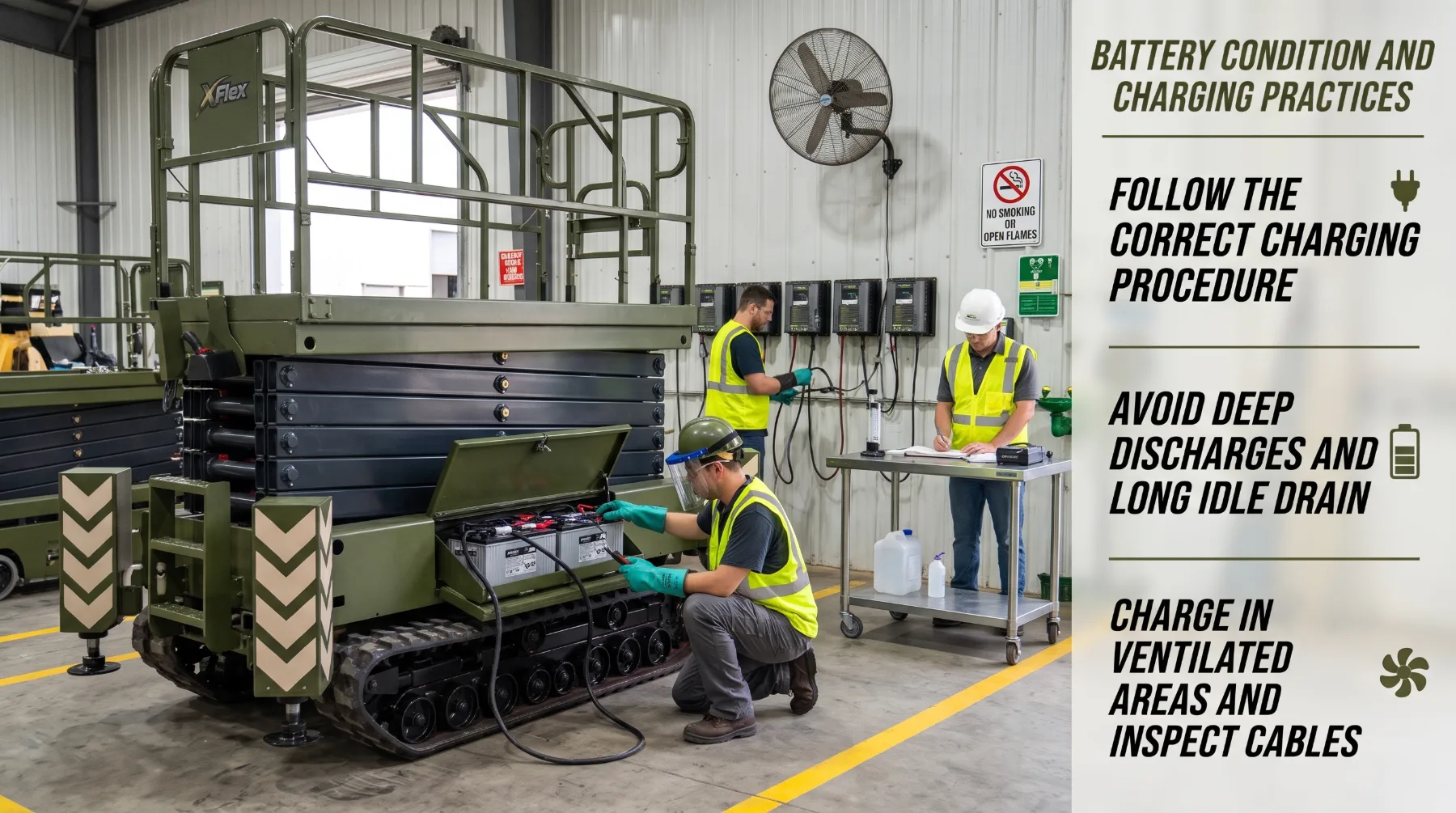
A battery's condition determines how much of its rated capacity is actually available. Batteries lose capacity gradually through normal aging, but poor charging habits, deep discharges, and neglected maintenance can accelerate that decline sharply. A pack that delivered a full shift when new may eventually manage only half a day, and in many cases the cause is how it was charged and cared for rather than how hard it was worked.
Charging practices should always follow the manufacturer's instructions for the specific battery type, using the charger supplied or specified for that machine. Flooded lead-acid batteries generally perform best with full charge cycles rather than repeated short top-ups, and they need electrolyte levels checked and topped up with distilled water, typically after charging so the electrolyte doesn't overflow. Periodic equalizing charges, where the manufacturer recommends them, help balance cells. Sealed AGM batteries don't need watering but are sensitive to incorrect charging voltages. Lithium-ion systems usually tolerate opportunity charging during breaks and rely on a battery management system that should never be tampered with.
Regardless of chemistry, avoid running batteries down routinely to the point where the lift cuts out, and avoid leaving lead-acid batteries in a discharged state for extended periods, which can cause permanent capacity loss through sulfation. Lifts stored for long periods, such as rental units between jobs or seasonal maintenance machines, should be charged according to the manufacturer's storage guidance.
Safety must be built into every charging routine. Charge lead-acid batteries only in well-ventilated areas, since charging can release hydrogen gas, and keep sparks and open flames away. Wear appropriate eye and hand protection when inspecting or servicing batteries, and make sure eyewash facilities are available where flooded batteries are maintained. Inspect charging cables, plugs, and connectors before each use, and stop using any charger or cable that shows damage. Keep battery terminals clean, tight, and free of corrosion. If the lift displays a battery or charging fault, investigate before continuing operation, and leave electrical repairs to qualified technicians.
Key takeaway: Battery condition directly limits usable runtime, so follow the manufacturer's charging and maintenance procedures for the specific battery type, avoid deep discharges, charge in ventilated areas, and inspect cables and connectors before every charge.
Temperature and Working Environment
Temperature has a strong influence on battery performance, and it's one of the most commonly overlooked reasons a scissor lift runs out of charge early. Cold conditions slow the chemical reactions inside a battery, reducing the energy it can deliver. Lead-acid batteries in particular can lose a noticeable share of their effective capacity in cold weather, so a lift that comfortably lasts a full shift in a heated building may struggle on an unheated construction site in winter. Cold also thickens hydraulic oil, which can make the pump work harder during the first lift cycles of the day.
Heat creates different problems. High temperatures can make a battery appear to perform well in the short term while accelerating internal degradation and shortening overall battery life. Charging in hot conditions adds further stress, and batteries that are already warm from heavy use may need time to cool before charging, depending on the manufacturer's guidance. Lithium-ion batteries have defined temperature ranges for both operation and charging. Many can't be charged below freezing unless the pack includes heating, and the battery management system may limit performance or charging outside its permitted range.
The broader working environment matters too. Dust, moisture, and debris can contaminate battery compartments, terminals, and electrical connectors, leading to corrosion, resistance, and voltage loss. Damp or wet conditions increase the risk of electrical faults. Rough, uneven, or debris-covered floors increase drive motor demand, while ramps and inclines require extra energy to climb. Outdoor use introduces additional considerations, including wind exposure and ground conditions, which affect where and whether a lift can safely be raised under its rated limits.
Practical steps help protect both runtime and battery life. Store and charge lifts indoors or in sheltered, temperature-moderate areas where possible, especially during cold months. Operate and charge within the manufacturer's permitted temperature ranges. Keep battery compartments clean and dry, check terminals for corrosion during routine inspections, and clear debris from travel routes. On cold sites, plan for shorter runtime and schedule charging opportunities accordingly rather than assuming summer performance.
Key takeaway: Cold reduces available battery capacity while heat accelerates long-term wear, so operate and charge within the manufacturer's temperature limits, store lifts in sheltered areas, and keep battery compartments clean and dry to protect runtime.
Conclusion
Battery runtime and lift cycle efficiency in electric scissor lifts depend on far more than the size of the battery pack. Capacity sets the available energy, but usable runtime is shaped by how often the platform is raised, how much weight it carries, how far the machine travels, the condition of the battery, how it's charged, and the temperature of the working environment. Raising the platform consumes the most energy, so grouping tasks at similar heights and avoiding unnecessary down-and-up trips delivers some of the biggest gains. Keeping platform loads lean and within rated limits protects both runtime and safety, while correct charging and maintenance preserve the battery's capacity over its service life. Cold sites, dirty compartments, and rough floors all reduce performance and deserve planning attention.
Start by reviewing the manufacturer's battery specifications for each lift in your fleet, then compare them against your typical daily workload. Build charging into the work schedule, train operators to sequence tasks and monitor charge levels, and keep simple records of runtime and charging frequency. Those steps help your electric scissor lifts stay productive from the first task of the day to the last, with fewer interruptions and longer battery life.
Frequently Asked Questions
What affects electric scissor lift battery runtime?
Runtime depends on several factors working together. Battery capacity and type set the available energy, while battery age and condition determine how much of that capacity is still usable. Lifting frequency has a major effect, since raising the platform draws the most power. Platform load, travel distance, floor conditions, and ramps add further demand. Temperature also matters, because cold reduces available capacity and heat accelerates battery wear. Charging habits influence long-term performance, so following the manufacturer's procedures helps preserve runtime.
Do frequent raising and lowering movements use more battery power?
Yes. Each raise requires the lift motor and hydraulic pump, or other lifting mechanism, to work against the weight of the platform and everything on it, which draws significant current. On many hydraulic models, lowering uses gravity and consumes relatively little energy, so every unnecessary lowering means paying the full energy cost of raising again. Small, repeated height adjustments also add up through repeated motor starts. Grouping tasks at similar heights and staging materials before raising can noticeably reduce battery use.
Does platform load affect lift cycle efficiency?
Yes. A heavier platform requires more hydraulic pressure and more work from the lift motor, which increases battery consumption on every raise. Carrying only the tools and materials needed for the current task, securing loose items, and distributing weight according to the manufacturer's instructions all help. The platform must always stay within its rated capacity and occupant limit, which may differ between indoor and outdoor use. Never overload the platform to reduce trips or bypass load-sensing systems.
How can contractors reduce charging interruptions?
Plan work sequences so the lift moves logically through each area, groups tasks at similar heights, and avoids unnecessary travel. Estimate daily lift cycles and operating hours against the battery's capacity and condition before the shift. Schedule charging during breaks, shift changes, or overnight according to the battery type, and position chargers near where work ends. Train operators to monitor the battery indicator and charge before the low-charge cutout. Keeping runtime and charging records also helps identify batteries that need testing or replacement.
Equipment Guidance
Need help choosing equipment for your next job?
Contact KONSTRUCTZ support and get practical guidance before comparing machines, attachments, or jobsite requirements.Contact SupportReader Comments
Join the equipment discussion
Related Posts
No published comments yet.