

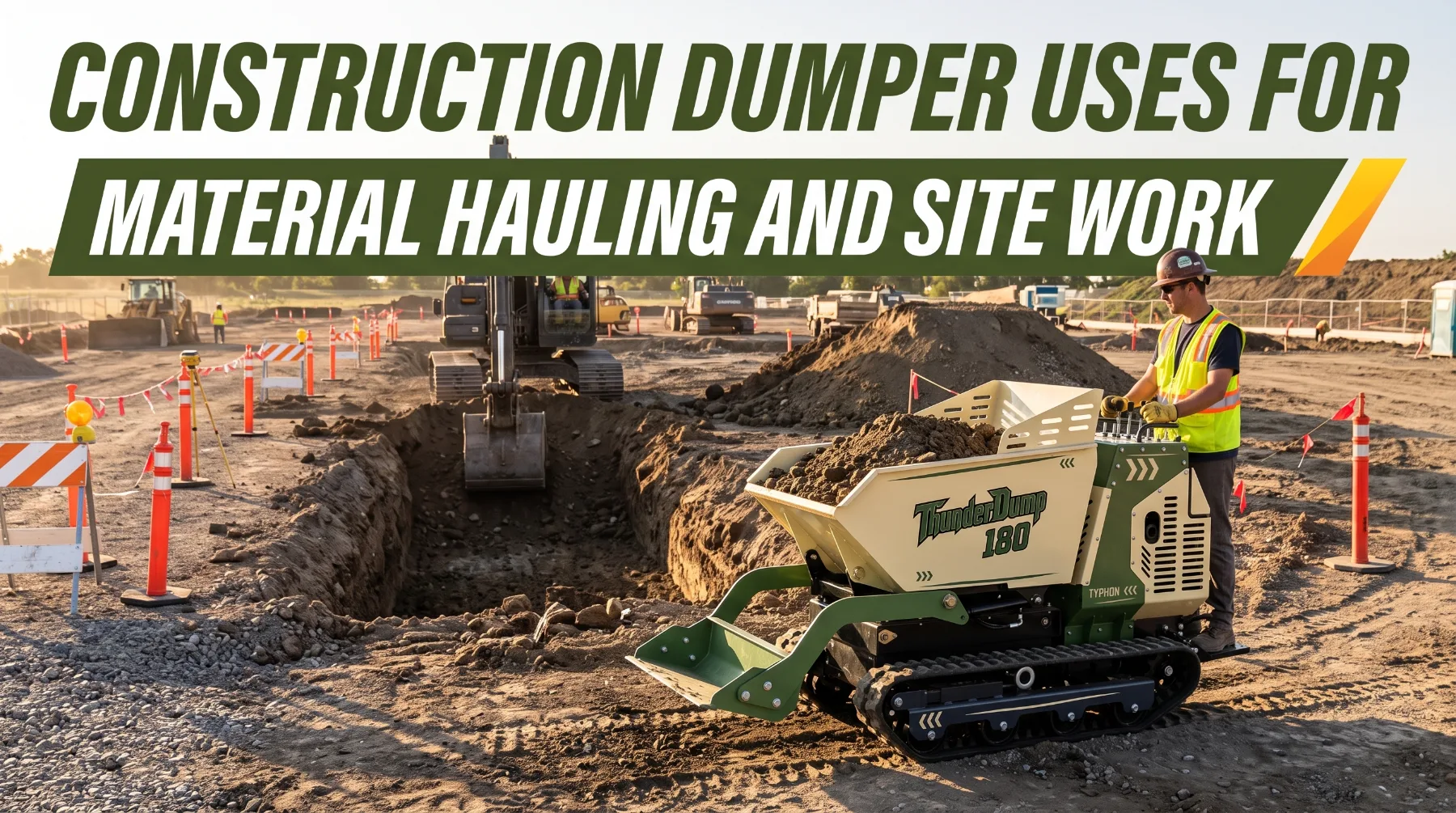
From foundation excavation to final landscaping, a construction site can require material to move constantly between different work areas. An excavator may load soil into a dumper, which then carries it to a stockpile before returning for another load. Later in the day, the same machine can transport gravel to a trench or move topsoil for landscaping. One compact hauler can support several stages of the project by repeatedly carrying and dumping material where it is needed.
Material transport is the core job of a construction dumper, but its usefulness comes from how easily it fits into different site workflows. Its load body provides space for soil, gravel, sand, and other suitable materials, while the drive system allows it to travel between excavation areas, stockpiles, trenches, and fill zones. The dumping mechanism then allows the load to be discharged at the required location without relying on separate handling equipment.
Across residential development and other construction projects, this ability to repeat short hauling cycles can keep material moving as different crews progress through their work. Compact dimensions can also help the dumper operate in areas where larger hauling equipment may have limited access. Matching the machine to the load, terrain, and site layout allows it to support excavation, ground preparation, material placement, and landscaping throughout the project.
Moving Loose Construction Materials
At its heart, a construction dumper gives you a dedicated load body for transporting loose materials around a jobsite. Soil, gravel, sand, crushed rock, and construction debris all need to move constantly during a project, and the dumper's body keeps that material contained from pickup to drop-off rather than scattered along the way.
The value shows in how it organizes the flow of work. Material moves cleanly between excavation areas, stockpiles, and active work zones, so a single machine can keep a site's material handling tidy and predictable. Just as importantly, this frees up your excavation and loading equipment to keep doing what they do best. While the dumper hauls, the excavator keeps digging and the loader keeps loading, and the whole operation stays in motion.
Key takeaway: A dumper's load body transports loose materials like soil, gravel, sand, rock, and debris between excavation areas, stockpiles, and work zones, keeping material handling organized.
Supporting Excavation Work
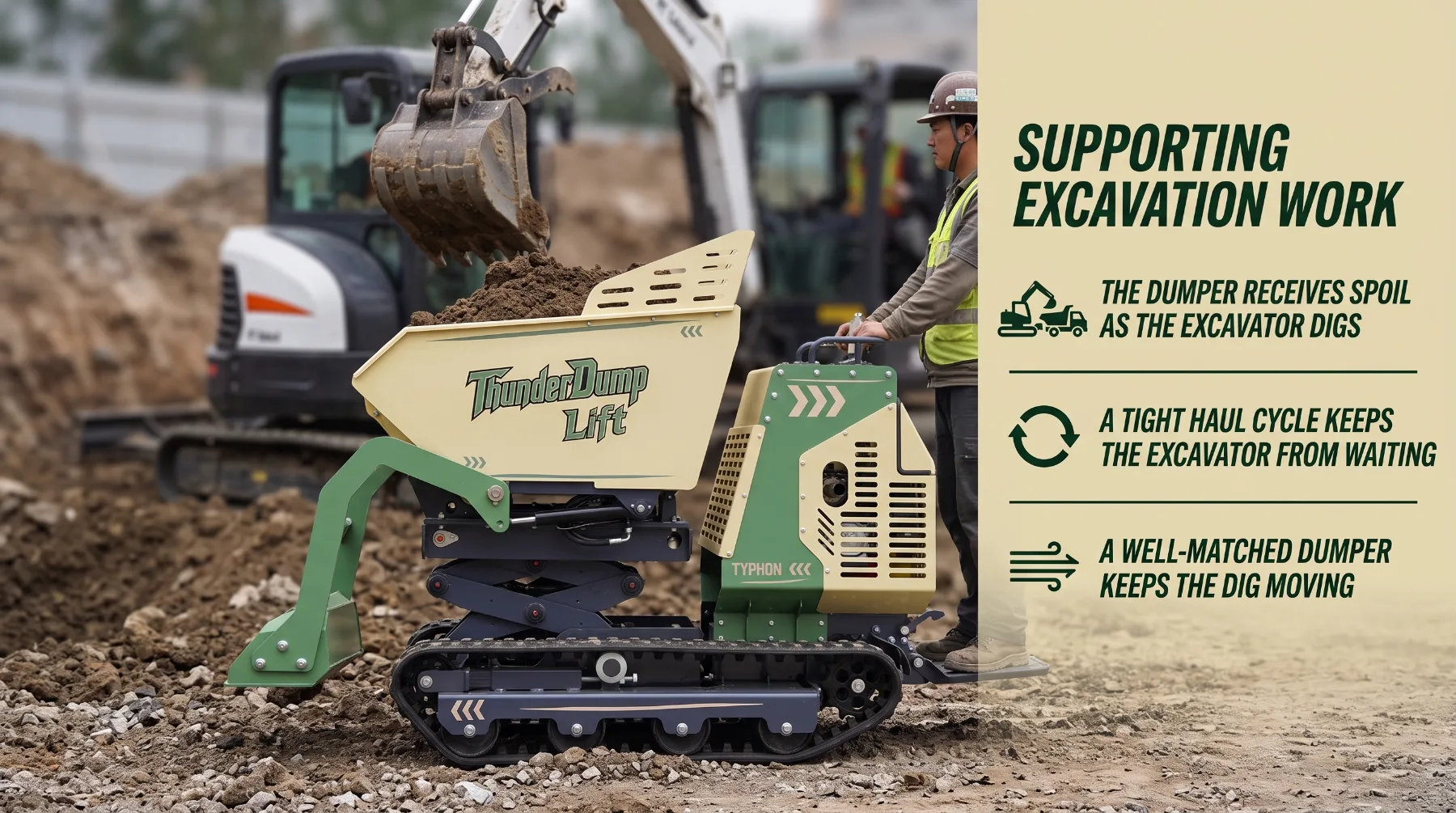
Excavation produces material fast, and all that soil has to go somewhere. A dumper solves this directly by working in partnership with the excavator: the excavator digs and loads, the dumper receives the material and carries it to a designated stockpile or disposal area. Between them, they turn a pile of spoil into a steady, managed flow.
That pairing creates a continuous cycle between the digging and hauling equipment. As long as the dumper returns before the excavator fills the space around it, the excavator never has to stop and wait. Keeping that rhythm tight is what keeps excavation productive, because a digging machine with nowhere to put its spoil quickly grinds to a halt. A well-matched dumper keeps the dig moving.
Key takeaway: A dumper receives material from an excavator and hauls it to a stockpile or disposal area, creating a continuous dig-and-haul cycle that keeps excavation productive.
Backfilling and Site Preparation
Hauling matters just as much after the digging is done. Once excavation is complete, suitable soil, aggregate, or fill material often needs to travel back to trenches and prepared areas. The same machine that carried spoil away is well suited to bringing material back in, closing the loop on the earthmoving cycle.
A dumper's advantage here is placement. It can deliver fill close to where it's actually needed, dropping material near a trench or prepared surface rather than leaving it in a distant pile for someone to move again by hand. That proximity supports efficient backfilling and other ground preparation tasks, cutting down the rehandling that eats into a crew's time. Delivered close to the point of use, material is ready to place and compact without extra steps.
Key takeaway: A dumper transports soil, aggregate, or fill back to trenches and prepared areas, delivering material close to where it's needed to support backfilling and ground preparation.
Handling Uneven Jobsite Terrain
Construction sites rarely offer smooth, easy ground. Loose soil, gravel, mud, slopes, and generally uneven surfaces are part of daily operation, and they place real demands on a hauling machine. Several factors determine how well a dumper copes: its design, traction, ground clearance, and the operator's control all shape performance on difficult terrain.
The operator's judgment ties it all together. A loaded dumper handles differently from an empty one, carrying more weight and momentum, so travel speed should be adjusted to both the terrain and the load. Easing back on soft, slippery, or sloped ground keeps the machine stable and under control, while pushing speed on poor footing invites trouble. Reading the ground and driving to suit it is a core part of safe, effective operation.
Key takeaway: Terrain like mud, loose soil, gravel, and slopes affects dumper performance, so traction, ground clearance, and operator control matter, and travel speed should be adjusted to terrain and load.
Efficient Loading and Unloading
Carrying capacity is only one part of a productive hauling operation. The full cycle depends on how well the surrounding pieces fit together: the loading area, the travel route, the dumping location, and the return distance all influence how quickly material actually moves. Time lost at any one of these points multiplies across every trip of the day.
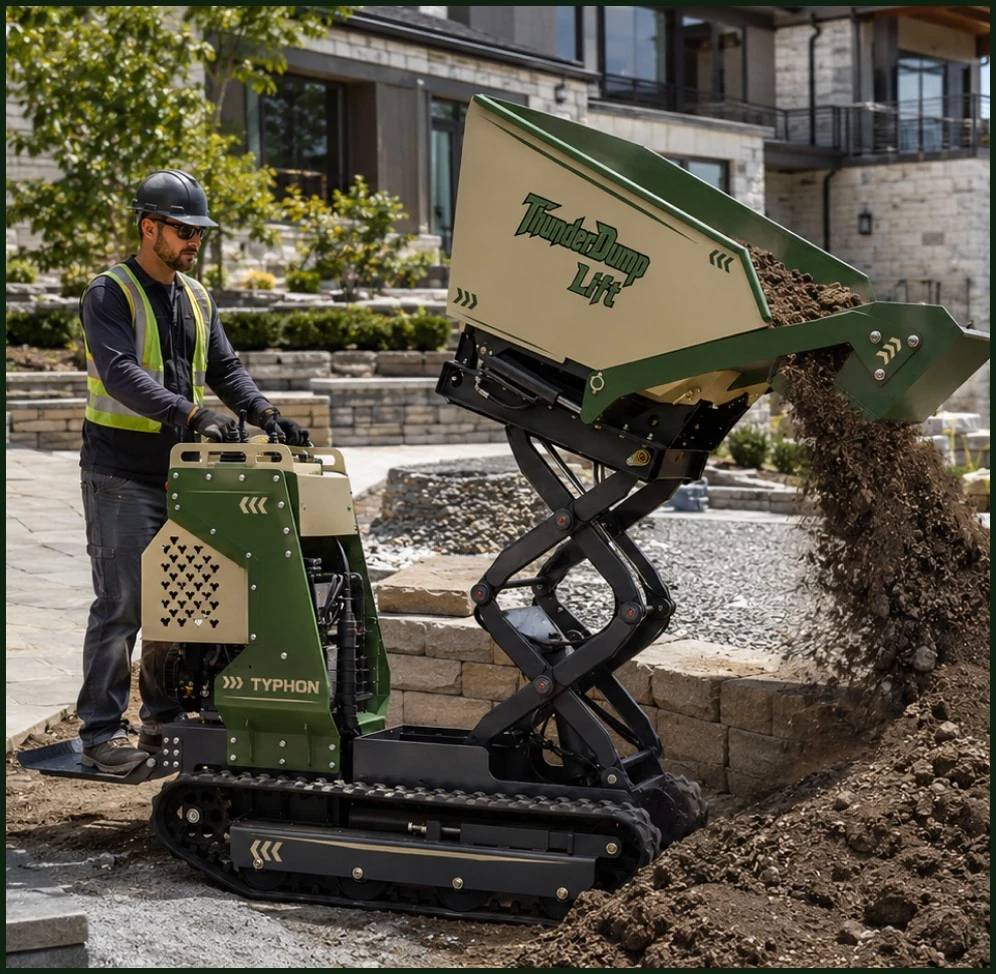
Unloading is where the machine's design pays off directly. A practical dump body lets the operator discharge the load quickly and cleanly before turning back for another cycle, so material leaves the machine in one controlled motion instead of a slow, awkward release. When loading points are well placed, routes are short, and dumping is efficient, the dumper spends its time moving material rather than waiting or maneuvering.
Key takeaway: A productive hauling cycle depends on the loading area, travel route, dumping location, and return distance, with a practical dump body allowing efficient discharge before the next cycle.
Supporting Landscaping Projects
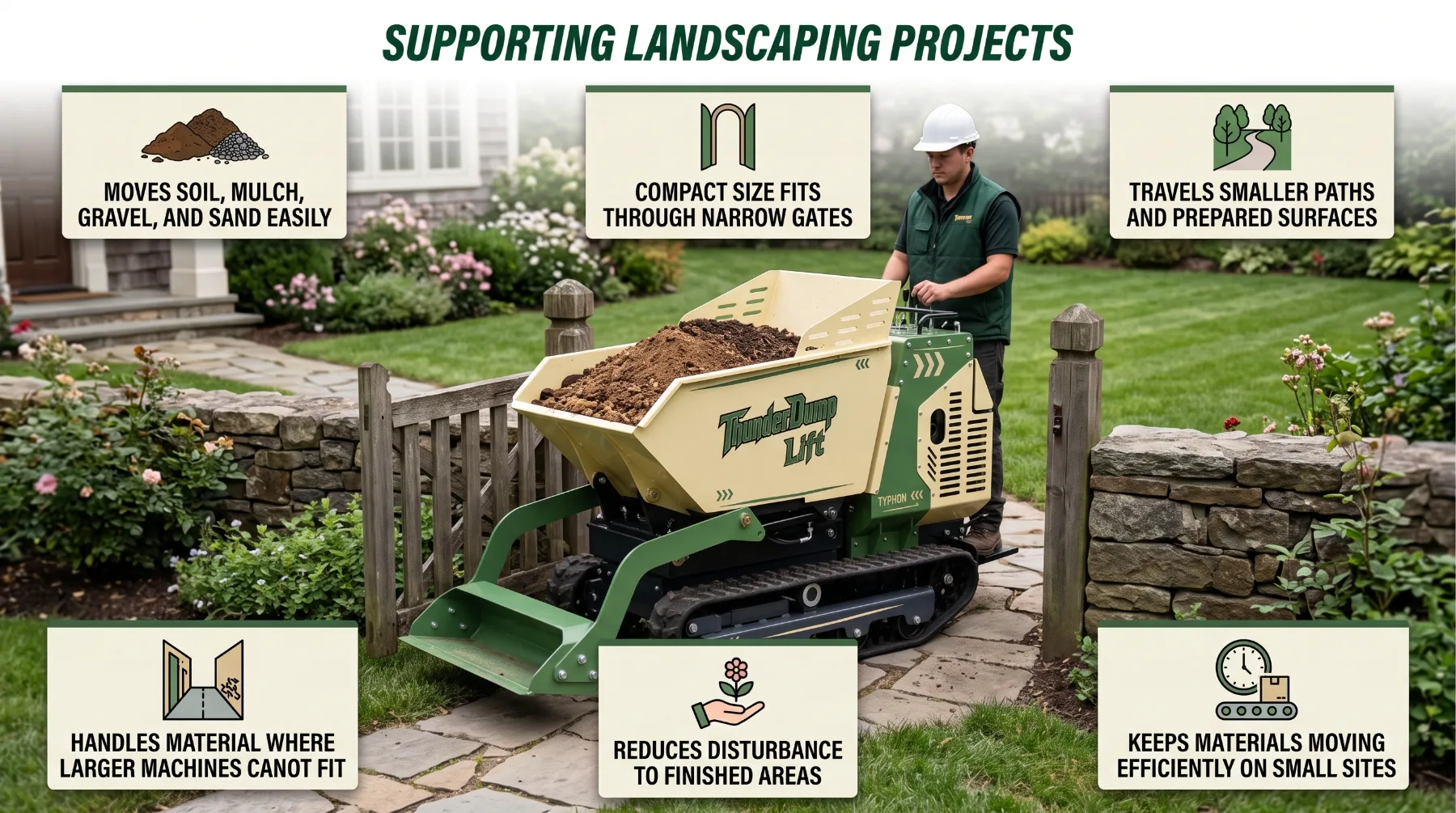
Material hauling is an important part of many landscaping and smaller construction projects, where soil, mulch, gravel, sand, and other materials need to be moved across yards, pathways, and prepared areas. These jobs often have limited access, making compact equipment more practical than larger hauling machines.
A compact dumper combines useful carrying capacity with a smaller working footprint, allowing it to move materials through gates, along narrow paths, and around existing landscaping or finished areas. This helps keep materials moving while reducing unnecessary disturbance to the surrounding site.
- Material Hauling: Moves soil, mulch, gravel, sand, and other common materials.
- Compact Access: Fits through narrower gates and restricted entry points.
- Pathway Movement: Can travel along smaller paths and prepared surfaces.
- Limited-Space Work: Helps handle material where larger machines may not fit.
- Reduced Site Disruption: Supports hauling while minimizing disturbance to finished areas.
- Project Efficiency: Keeps materials moving efficiently across landscaping and small construction sites.
Key takeaway: A compact dumper transports soil, mulch, gravel, and sand across yards and landscaping areas, proving useful where access is limited and repeated hauling is required.
Reducing Manual Material Handling
Moving heavy material by hand is slow, tiring, and expensive in labor. Loading wheelbarrows and shifting soil or gravel by shovel eats up hours and wears down a crew, all to move relatively small quantities at a time. Mechanized hauling changes that equation entirely.
A dumper lets a crew move far larger quantities per cycle while reducing the reliance on manual transport. Instead of many trips with a wheelbarrow, a single loaded dumper covers the same ground in one pass, freeing the crew for skilled work rather than repetitive carrying. That shift keeps material flowing steadily between the different stages of a project, so progress isn't held back by the pace of hand labor. The result is faster material movement and a crew that finishes the day with more energy for the tasks that need it.
Key takeaway: Mechanized hauling moves larger quantities per cycle than manual labor, reducing reliance on hand transport and keeping material flowing between project stages.
Conclusion
A construction dumper supports excavation, backfilling, landscaping, grading preparation, and general material hauling by transporting soil, rock, gravel, sand, fill, and other loose materials between work areas. Its load body carries material between the loading point and destination, while the tipping mechanism allows controlled discharge near trenches, foundations, stockpiles, or prepared areas. When paired with an excavator, the dumper can maintain a continuous dig-and-haul cycle by matching its loading and hauling capacity to the excavator's production rate. Compact dumpers can also improve access on restricted sites, while traction, ground clearance, payload, and travel speed become increasingly important on uneven, soft, or sloped terrain. Efficient loading and dumping locations should minimize travel and rehandling, keeping material close to its final placement point and reducing manual movement. Matching the dumper to the material, terrain, payload requirements, access conditions, and site workflow helps maintain consistent hauling cycles and reliable material movement throughout construction and landscaping work.
Frequently Asked Questions
What materials can a construction dumper carry? A construction dumper can carry loose materials such as soil, gravel, sand, rock, aggregate, and construction debris, depending on its design and rated capacity. These materials commonly move between excavation areas, stockpiles, and work zones during construction. Always stay within the dumper's rated capacity, especially when hauling dense materials such as rock that place greater loads on the body. Match the dumper to the materials and volumes your projects regularly require.
How does a dumper support excavation? A dumper supports excavation by carrying spoil away as the excavator digs. The excavator loads removed soil into the dumper, which transports it to a stockpile or disposal area before returning for another load. This keeps the excavation area clear and prevents the excavator from waiting for space to unload material. Matching the dumper's capacity and cycle time to the excavator's output helps maintain a continuous dig-and-haul workflow.
Can dumpers be used for landscaping? Yes. Dumpers can transport soil, mulch, gravel, sand, and other landscaping materials across yards and development areas when access and load capacity are suitable. Compact models are especially useful because they can move through gates, narrow paths, and around finished landscaping features where larger equipment may cause more disruption. Their contained load body and efficient unloading make them practical for repeated material hauling in restricted spaces.
Why is dumping ability important? Dumping ability directly affects the efficiency of each hauling cycle. A dumper that can discharge its load quickly and cleanly spends less time waiting at the unloading point and can return for the next load sooner. Controlled dumping also helps place material closer to its final location, reducing rehandling. Combined with efficient loading and reasonable travel distances, effective dumping keeps material moving and improves overall cycle productivity.
Equipment Guidance
Need help choosing equipment for your next job?
Contact KONSTRUCTZ support and get practical guidance before comparing machines, attachments, or jobsite requirements.Contact SupportReader Comments
Join the equipment discussion
Related Posts
Keep comparing before the next job
 Machinery EducationIntroducing KonstructZ: Heavy Equipment Built for Serious Work5 min read
 Machinery EducationKonstructZ Heavy Equipment | Mini Excavators, Skid Steers, Forklifts, Road Rollers & More4 min read
 Dumpers, Machinery Education, Maintenance & SafetyMini Dumper Work Guide: How Dumpers Help Move Materials Faster on the Jobsite4 min read
No published comments yet.