
Table of Contents
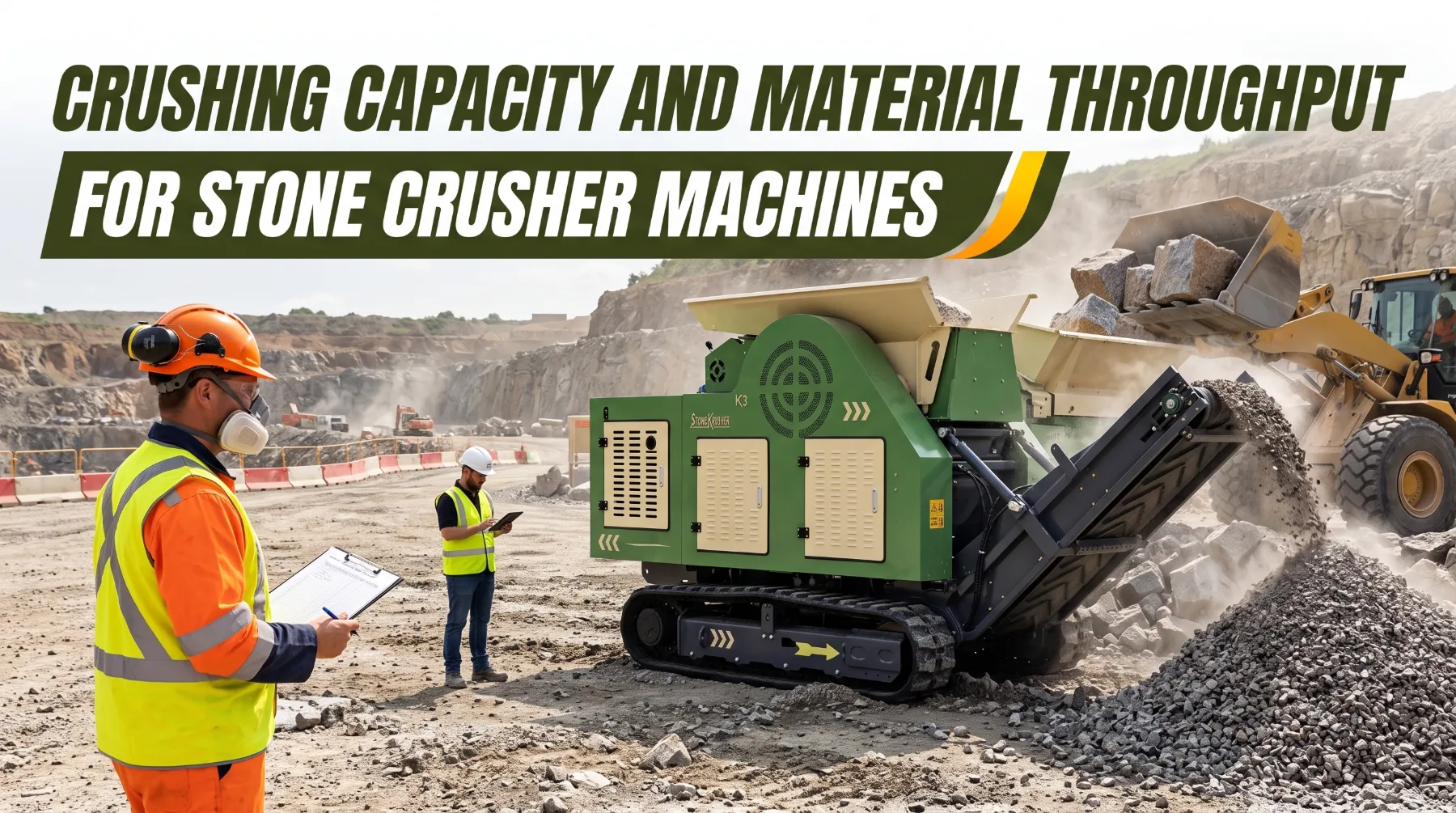
Running a stone crusher efficiently requires understanding the difference between a machine's rated capacity and the amount of material it actually processes on a jobsite. Published capacity figures reflect specific operating conditions, rock types, feed sizes, and machine settings. In real-world applications, rock hardness, moisture, clay content, feed consistency, finished product requirements, and wear part condition can all reduce output below the advertised rating. Planning around these variables helps contractors estimate production more accurately, manage operating costs, and avoid delays caused by unrealistic expectations.
Feed consistency and crusher configuration influence throughput more than many operators expect. A crushing chamber that alternates between flooding and starving cannot maintain its best performance. Oversized feed, sticky clay, and worn jaw dies can further reduce efficiency. Matching the feed rate to the crusher's capacity, removing excessive fines and clay before they enter the chamber, and setting the closed side setting according to the manufacturer's recommendations can help increase usable output. Adding a second crushing stage or a screening deck may also improve production by reducing material to the required size and separating several aggregate products from the same processing run.
Wear parts connect machine condition with production efficiency and final product quality. As jaw dies, liners, and screen media wear, chamber geometry changes, product shape can deteriorate, and the effective crushing setting may shift. Regular inspections, wear tracking against processed tonnage, and planned replacements help prevent unexpected downtime. Safety must remain a priority throughout feeding, inspection, blockage removal, and maintenance. Attempting to clear a blockage while a crusher is running can cause severe or fatal injuries. The machine must be shut down, locked out, and verified isolated before anyone approaches hazardous areas. By planning realistic production targets, maintaining steady material flow, and servicing wear parts on schedule, contractors can produce specification-compliant aggregate while protecting their crews.
What Crushing Capacity Figures Actually Measure
Crushing capacity describes the amount of material a stone crusher can process under specified operating conditions. Manufacturers commonly publish capacity charts based on variables such as the closed side setting, feed gradation, material properties, and machine configuration. A rating advertised as "up to" a particular number may represent favorable conditions rather than the output contractors should expect from every job. Actual production can differ substantially when the feed contains excessive fines, the rock is highly abrasive, or the machine must produce a smaller finished aggregate size. Understanding these limitations helps operators distinguish between theoretical capability and dependable daily production.
Reading the manufacturer's capacity chart is more useful than relying on a headline rating. A tighter closed side setting generally requires greater material reduction and can reduce throughput, although the exact effect depends on the crusher design and feed characteristics. Before comparing machines, confirm the assumptions behind their published ratings, including the specified setting, feed material, and product requirements. Two crushers with similar advertised capacities may perform differently when processing the same rock. Where possible, use production records from comparable jobs to establish a realistic baseline. Belt-scale measurements, truck tickets, and recorded operating hours can reveal how much material the machine actually processes under local conditions.
Daily output depends on actual throughput and productive operating time rather than rated capacity alone. A useful estimate multiplies measured tons per hour by scheduled operating hours and the expected utilization rate. Utilization accounts for fueling, inspections, setting adjustments, blockage clearing, loader delays, breaks, and other interruptions. For example, a crusher processing 80 tons per hour over an eight-hour shift at 75% utilization would produce approximately 480 tons during that shift. This estimate assumes the measured processing rate remains representative during productive operating time. Recording actual tonnage and downtime helps contractors refine future estimates and create more reliable delivery schedules.
Key takeaway: Rated capacity reflects specified conditions. Read the manufacturer's chart for the required setting, confirm its assumptions, and estimate daily production using realistic throughput and operating time.
How Rock Properties Affect Throughput and Wear
Rock characteristics influence crushing efficiency, energy demand, and wear part life. Hard, abrasive materials such as granite, basalt, and trap rock generally require more energy to fracture than many softer limestone or sandstone deposits. Depending on the crusher type and material properties, harder rock may reduce throughput and increase stress on the crushing chamber. Quartz-rich materials can accelerate wear on jaw dies, liners, and other components, increasing maintenance frequency and replacement costs. Contractors should evaluate the expected rock composition before selecting equipment and maintain suitable replacement parts when processing highly abrasive material.
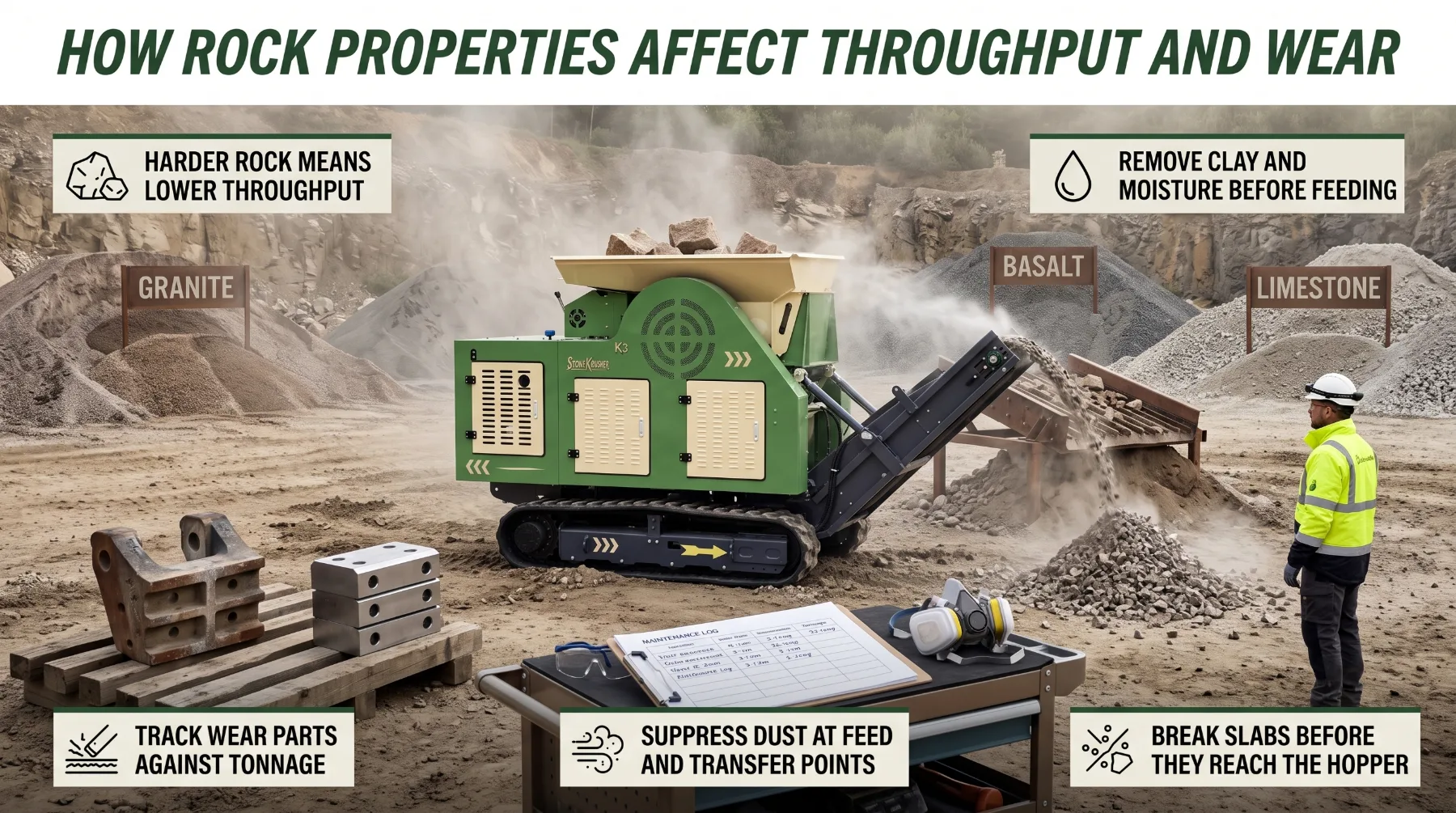
Moisture, clay, and excessive fines can further reduce chamber efficiency. Sticky clay may coat grizzly bars, obstruct screening surfaces, and accumulate inside the crushing chamber. Material already smaller than the required product size can also occupy valuable processing capacity if it enters the chamber unnecessarily. Removing overburden separately, using a suitable prescreen or grizzly, and separating excessive fines before primary crushing can help maintain a consistent feed. Where site conditions permit, storing feed material so it can drain after rainfall may also reduce moisture-related problems. Operators should assess the material carefully because saturated or clay-rich feed can behave differently from clean, dry rock even when both have similar nominal sizes.
Particle shape affects feeding reliability and finished aggregate quality. Large, slabby, flat, or elongated pieces may bridge across the hopper or crushing chamber instead of entering the crushing zone smoothly. These shapes can also contribute to flaky aggregate that fails project gradation or particle-shape requirements. Breaking oversized slabs before feeding and maintaining an appropriate, consistent feed can help reduce interruptions. Material composition also affects dust exposure. Crushing rock containing crystalline silica can generate respirable silica particles, creating a serious occupational health hazard. Suitable dust suppression, enclosed transfer points where appropriate, exposure controls, and required respiratory protection should form part of the operation's safety plan.
Key takeaway: Rock hardness, abrasiveness, moisture, clay content, and particle shape affect production and wear. Evaluate feed material before estimating output, and remove excessive clay and fines where the crusher configuration allows.
Feed Size, Crusher Configuration, and Finished Product
The crusher's feed opening and permitted maximum feed size determine whether incoming material can enter the crushing chamber reliably. Pieces approaching the opening's full dimensions may bridge across the jaw or fail to enter the chamber in a suitable orientation. The acceptable feed size depends on the crusher design and the shape of the material, so operators should follow the manufacturer's specified limits rather than relying on a universal percentage. Oversized rock should be reduced before feeding, using an appropriate method such as a hydraulic breaker operated in a controlled area. Never assume that a crusher can safely process material that exceeds its rated feed limits.
Different crusher types are designed for different stages and material characteristics. Jaw crushers compress rock between fixed and moving jaw plates and are commonly used for primary crushing of large feed material. Impact crushers fracture material through impact and can produce well-shaped aggregate, although abrasive rock may cause rapid wear to blow bars and related components. Cone crushers compress rock between a mantle and concave, making them useful for secondary and tertiary reduction of many hard-rock materials. The most appropriate configuration depends on feed size, rock properties, required reduction, and final product specifications. When a single machine cannot achieve the desired reduction efficiently, a multi-stage crushing circuit may deliver better overall performance than forcing the primary crusher beyond its intended operating range.
Finished product requirements determine how much reduction the crushing circuit must perform. Producing smaller aggregate generally requires additional processing and can reduce hourly throughput, depending on the material and equipment. A screening deck separates material into different size fractions, while oversize material may be returned for further crushing through a suitable recirculating system. This approach can produce several usable products from one feed source, such as road base, drainage stone, and screenings. Each fraction should be stockpiled separately to prevent contamination and preserve product quality. Contractors should select the crusher, settings, and screen configuration according to the required gradation rather than focusing exclusively on maximum tonnage. High output has little value if the resulting aggregate fails the project's specifications.
Key takeaway: Keep feed within the manufacturer's limits, reduce oversized material before crushing, select a suitable crusher configuration, and match settings and screening arrangements to the required aggregate sizes.
Feeding Consistency and Material Flow
A stone crusher performs best when material enters the chamber at a consistent, appropriate rate. Uneven feeding creates repeated periods of starvation and overloading, reducing production and making output less predictable. When the chamber receives too little material, rock may not remain in effective contact with the crushing surfaces. When too much material enters at once, the chamber may become overloaded, conveyors can back up, and protective systems may trigger stoppages. Maintaining a steady feed helps the crusher operate within its intended range and supports more consistent aggregate quality throughout the shift.
Loading equipment should be matched to the crusher's processing capacity and site layout. An excavator or [wheel loader](/equipment/wheel-loaders) working from a nearby prepared stockpile may provide a more consistent supply than equipment traveling long distances between the feed source and hopper. Operators should place material into the designated feeding area according to the manufacturer's instructions rather than dropping buckets from excessive heights. Feeder speed controls and level sensors, when fitted, can help regulate the supply of material. Contractors should also confirm that discharge conveyors, screens, and stockpile areas can handle the crusher's expected output. A bottleneck downstream can force the entire operation to slow or stop, even when the crusher itself has sufficient capacity.
Bridging occurs when large or irregular pieces become lodged across the hopper or crushing chamber, preventing material from moving normally. Appropriate feed sizing and removal of oversized slabs before crushing can reduce the likelihood of blockages. If bridging occurs, operators must follow the manufacturer's approved shutdown and clearing procedure. Never climb onto the feeder, reach into the hopper, or use a pry bar near moving components while the machine is running. Shut down and isolate the crusher and connected equipment, apply lockout/tagout devices, verify that hazardous energy has been controlled, and account for material that could shift or fall. Only trained personnel should clear blockages using approved procedures and equipment.
Key takeaway: Maintain steady feeding, coordinate loading equipment with downstream processing capacity, and never approach or clear a blockage until the equipment is shut down, isolated, and verified safe.
Wear Parts and Production Maintenance
Wear parts directly affect crushing performance, product quality, and operating costs. As jaw dies wear, their ability to grip and fracture material can decline, while changes in chamber geometry may affect the effective closed side setting and product gradation. Cone liners and impact crusher blow bars also change shape as material wears away, influencing the reduction process and the consistency of the finished product. Screen media can stretch, tear, or become blinded by damp fines, allowing unwanted particle sizes into the product or sending acceptable material back for unnecessary processing. These changes may occur more quickly when processing highly abrasive rock, making regular inspection particularly important.
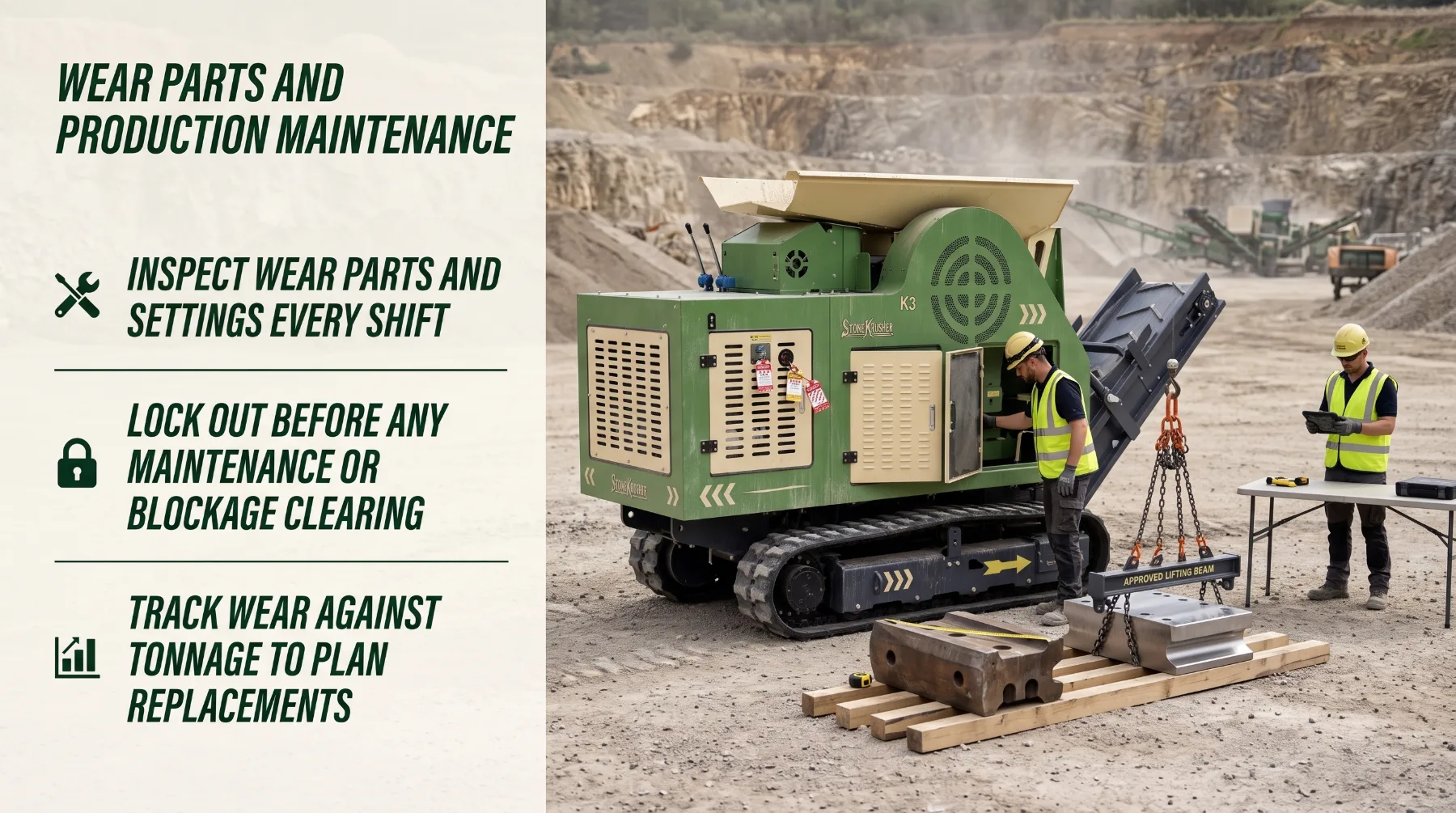
Daily maintenance inspections should cover crushing surfaces, the closed side setting, screen media, conveyor belts, idlers, hydraulic hoses, fittings, guards, emergency stops, and relevant engine fluids and filters. Check the crusher setting using the manufacturer's approved procedure, with the machine shut down and isolated as required. Some jaw dies can be rotated or reversed to extend their service life, but this should only be done when the design and manufacturer's instructions permit it. Monitoring wear more frequently during abrasive applications can help operators identify performance changes before they cause significant production losses. Keeping appropriate replacement parts available also reduces delays when servicing becomes necessary.
Crusher maintenance involves heavy components, stored energy, elevated temperatures, and moving machinery that can cause severe or fatal injuries. Before entering hazardous areas or servicing the chamber, shut down the crusher and connected equipment, apply lockout/tagout devices, and verify isolation. Release or secure stored hydraulic, mechanical, gravitational, and other hazardous energy according to the manufacturer's procedures. Allow hot components to cool and use approved lifting equipment when handling heavy wear parts. Never check a hydraulic leak by running a hand along a hose because pressurized fluid can penetrate the skin and cause serious injury. Record wear measurements, setting readings, part replacements, processed tonnage, and operating hours in a maintenance log. These records help estimate component life, plan replacement intervals, and schedule servicing before worn parts cause unexpected downtime.
Key takeaway: Inspect wear parts, settings, screens, conveyors, and safety controls regularly. Perform maintenance only after proper shutdown and isolation, and track wear against tonnage to plan timely replacements.
Conclusion
Crushing capacity provides a starting point for production planning, but actual material throughput depends on the entire operation working together. Manufacturer ratings reflect specified conditions, so realistic estimates should account for actual tons per hour, productive operating time, and expected downtime. Rock hardness, abrasiveness, moisture, and clay content influence both output and wear. Feed size, crusher type, chamber settings, and finished product requirements determine how efficiently material can be reduced. Consistent feeding helps prevent interruptions, while appropriate screening arrangements separate aggregate into usable sizes. Regular maintenance preserves performance, and strict shutdown and isolation procedures protect workers during blockage removal and repairs. By accounting for these factors from the beginning, contractors can plan more dependable production schedules, control operating costs, and deliver aggregate that meets project specifications.
Frequently Asked Questions
What does stone crusher throughput mean?
Throughput is the amount of material a crusher processes over a specified period, commonly measured in tons per hour. It represents actual production under working conditions, while rated capacity reflects the manufacturer's specified test or operating conditions. Rock properties, feed size, machine settings, and wear part condition all influence throughput.
Why can actual output be lower than rated capacity?
Hard rock, inconsistent feeding, excessive moisture, clay, worn parts, and smaller target aggregate sizes can reduce production. Oversized pieces may cause bridging, while excessive fines can occupy chamber space without requiring further crushing. Tracking actual tonnage and downtime helps establish realistic production estimates.
Does a larger crusher always produce more aggregate?
No. Crusher design, material characteristics, feeding consistency, and product requirements all influence output. A larger machine may underperform if it receives unsuitable material or is poorly matched to the rest of the processing circuit. Select equipment according to the feed material, target products, and loading capacity.
How can operators maintain crushing capacity?
Follow the manufacturer's feed limits, maintain consistent feeding, inspect wear parts, and service the machine according to the maintenance schedule. Remove excessive clay and fines where appropriate, check settings regularly, and replace worn components before they significantly affect performance. Always shut down, lock out, and verify isolation before clearing blockages or performing maintenance.
Equipment Guidance
Need help choosing equipment for your next job?
Contact KONSTRUCTZ support and get practical guidance before comparing machines, attachments, or jobsite requirements.Contact SupportReader Comments
Join the equipment discussion
Related Posts

No published comments yet.