
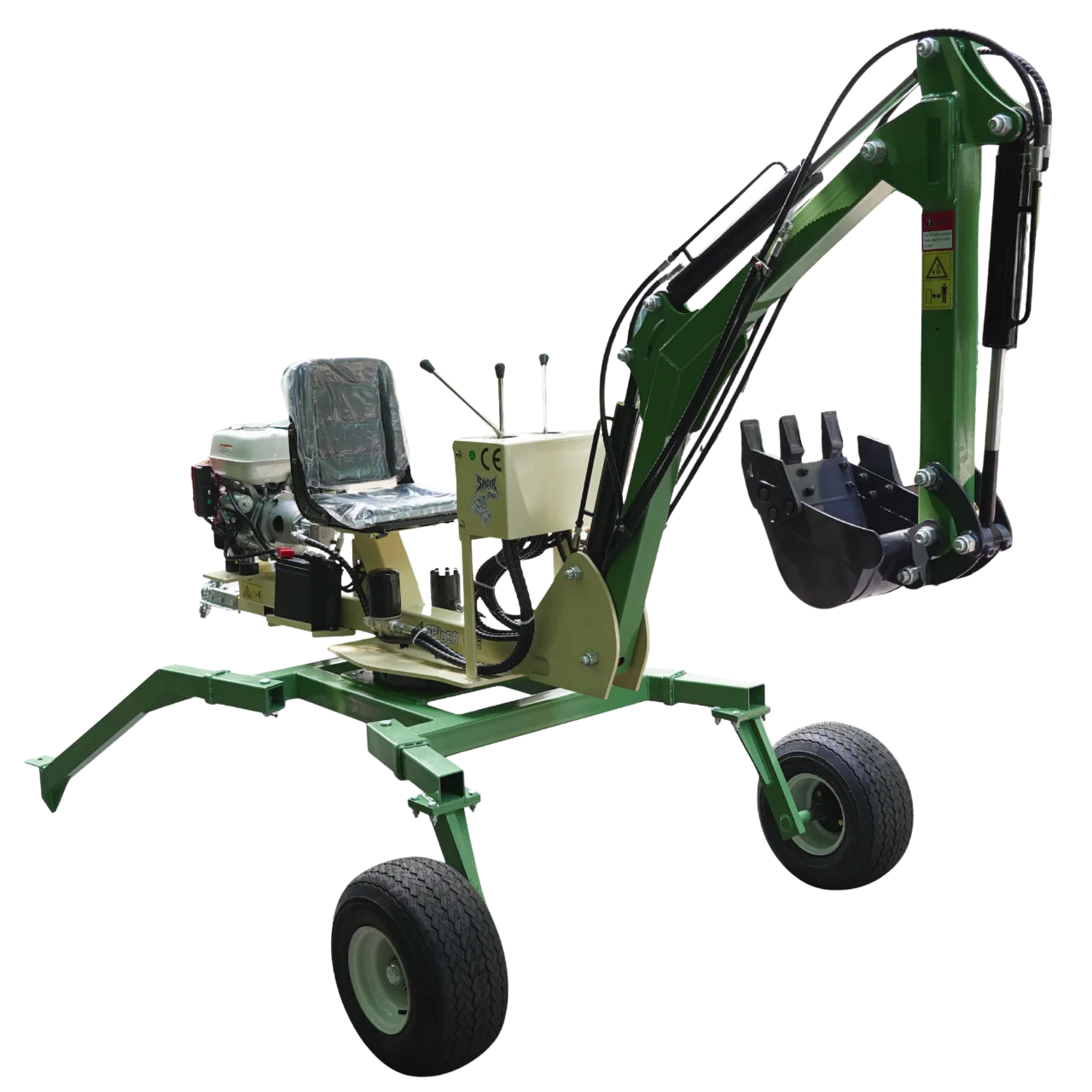
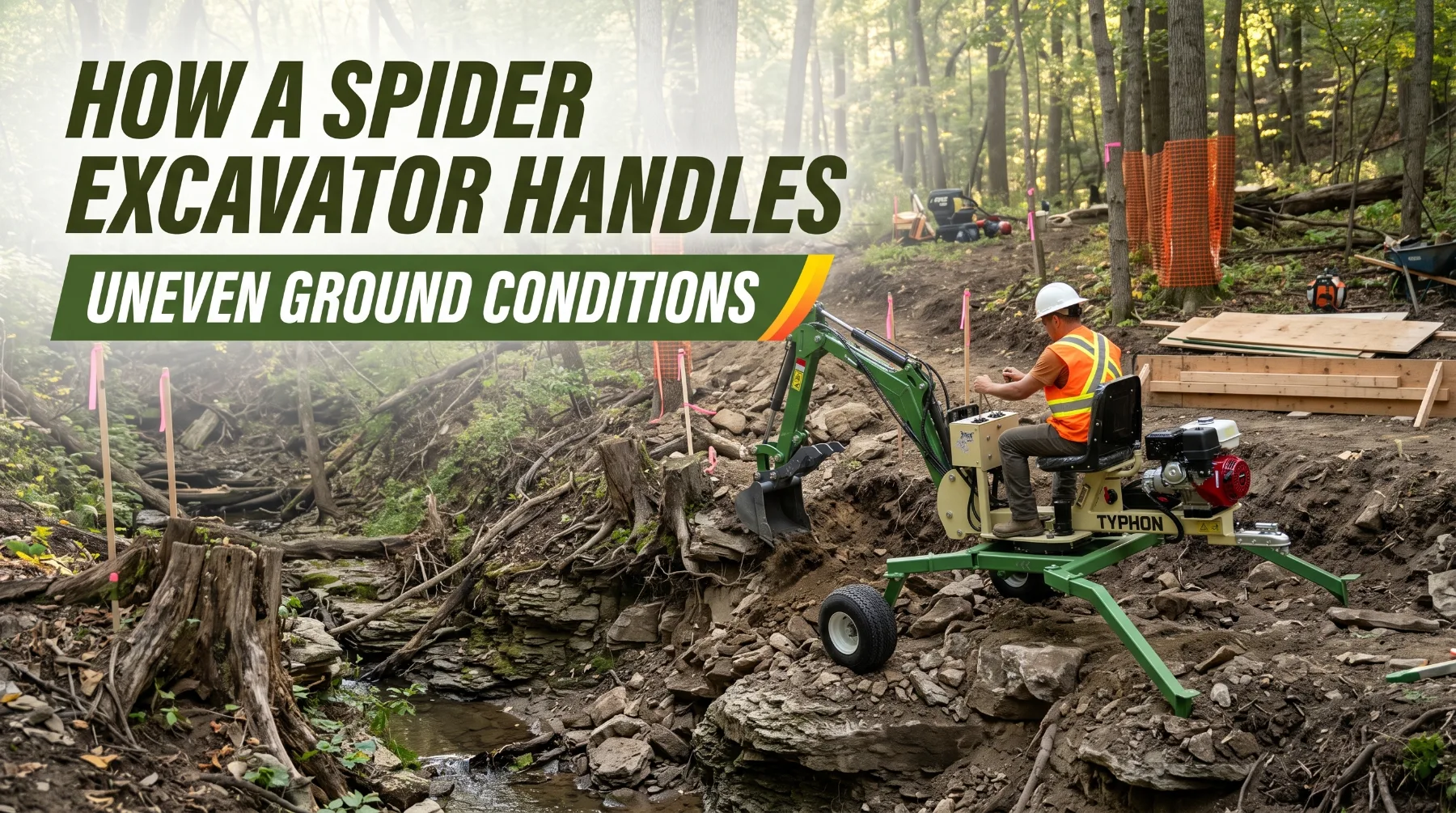
Excavation on steep, rocky, or uneven terrain can make it difficult for conventional equipment to maintain a stable working position. Ravines, slopes, exposed roots, loose rock, and soft soil may change conditions across a single work area, especially when access is limited and clearing is restricted. A spider excavator can provide a practical option for these sites, but safe operation still begins with careful assessment of the terrain.
Adjustable support legs allow a spider excavator to position its upper structure across irregular ground while maintaining a more suitable working stance. Operators need to identify unstable slabs, voids, soft soil, roots, and other hazards before setting the machine, then place each support on firm ground or appropriate load-spreading surfaces. As excavation changes the surrounding ground, support positions may also need to be adjusted to maintain stability.
Planning each repositioning move and checking new support locations before shifting machine weight helps reduce the risk of instability. Ground conditions should be monitored throughout the excavation, particularly near slopes, cuts, soft soil, and unsupported edges. With proper positioning, controlled movement, and continuous ground assessment, a spider excavator can support accurate excavation while working in difficult terrain and restricted areas.
Assess the Terrain First
Every stable setup on uneven ground begins with a careful assessment before the machine moves. Walk the full work area, including the travel route and each planned working position, and check slopes against the manufacturer's travel and operating limits. Look for soft or saturated soil, recent fill, loose rock, stumps, roots, debris, drop-offs, trench edges, retaining walls, creek banks, and other unstable areas. Pay attention to ledges that may be loose slabs rather than solid bedrock, as well as hidden voids from rotted stumps, animal burrows, or damaged drainage lines. Also check for overhead branches, power lines, and nearby structures within the boom's reach. If a location does not clearly meet the machine's operating requirements, choose a safer position or improve the ground before setup.
Utility locating should be part of every site assessment. Contact the local utility locating service before digging and ask the property owner about private lines that may not be marked. Review available geotechnical information and site-specific engineering requirements, particularly when working near slopes, water, or unstable ground. Weather can also change ground conditions quickly, so reassess the area after significant rain or other weather changes and at the beginning of each shift. Regular assessment helps identify hazards that may not be visible during the initial inspection and supports safer machine positioning throughout the job.
Key takeaway: Examine slopes, ground firmness, obstacles, and drop-offs before entering an uneven area, and position the machine only where the surface meets its operating requirements.
Use the Support System Correctly
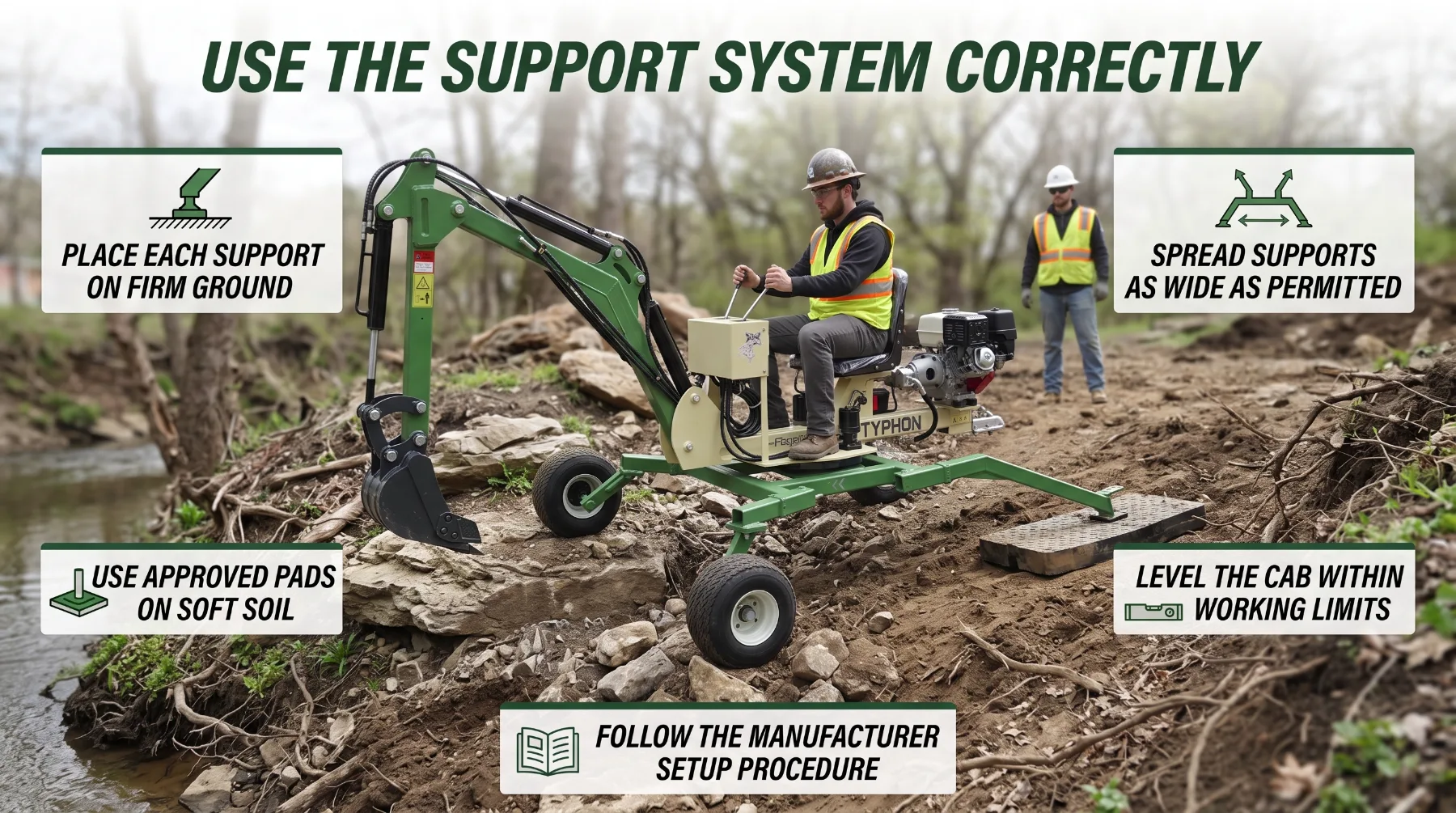
A spider excavator's support system allows the machine to adapt to irregular terrain while keeping the upper structure level. Depending on the model, supports may use wheels, tracks, or foot pads, with each leg adjusted independently. Correct positioning, firm ground, and proper support contact are essential for maintaining stability during excavation.
- Support Positioning: Place each leg on firm ground away from trench edges, fresh cuts, and unstable surfaces.
- Wide Support Footprint: Spread the supports as far as the site and manufacturer allow to improve resistance to tipping.
- Load Distribution: Use approved pads where needed and ensure every support is carrying weight firmly on the ground.
- Level & Stability: Level the upper structure and monitor support points for settlement during operation.
- Support Inspection: Check cylinders, pivot points, pads, wheels, and other components for leaks, wear, or damage before use.
Key takeaway: Set the supports according to the manufacturer's instructions, place each one on firm ground, and confirm the machine is stable and level before digging begins.
Maintain Controlled Movement
A spider excavator can lose stability even when it was properly positioned if boom, arm, bucket, or swing movements are too aggressive. Extending the boom and arm moves the load farther from the machine, while swinging a loaded bucket creates outward forces that can be more difficult to control on slopes or uneven ground. Heavy materials such as rock or saturated soil add weight quickly, and sudden stops or direction changes can create sharp forces through the supports. Use gradual joystick inputs, keep heavy loads close to the machine when possible, swing slowly, and avoid moving loaded buckets toward the downhill side. Place spoil on stable ground away from the excavation, preferably where it will not add loading near the machine or trench edge, and use the manufacturer's lift and working-range information when handling heavy materials.
Fine-control modes or adjustable response settings can provide smoother operation on difficult terrain when available. Feather movements into smooth stops rather than making abrupt changes, and pay attention to how the machine responds throughout the work. If a support lifts, the machine begins rocking, or an inclination warning activates, stop immediately and lower the bucket to the ground. Reassess the machine's position, support points, load, and ground conditions before continuing. Controlled operation helps keep changing forces more predictable and reduces unnecessary stability risks.
Key takeaway: Boom, arm, bucket, and swing movements change the forces acting on the machine, so use smooth, controlled inputs and avoid sudden movements that can affect stability on slopes or irregular ground.
Plan Repositioning
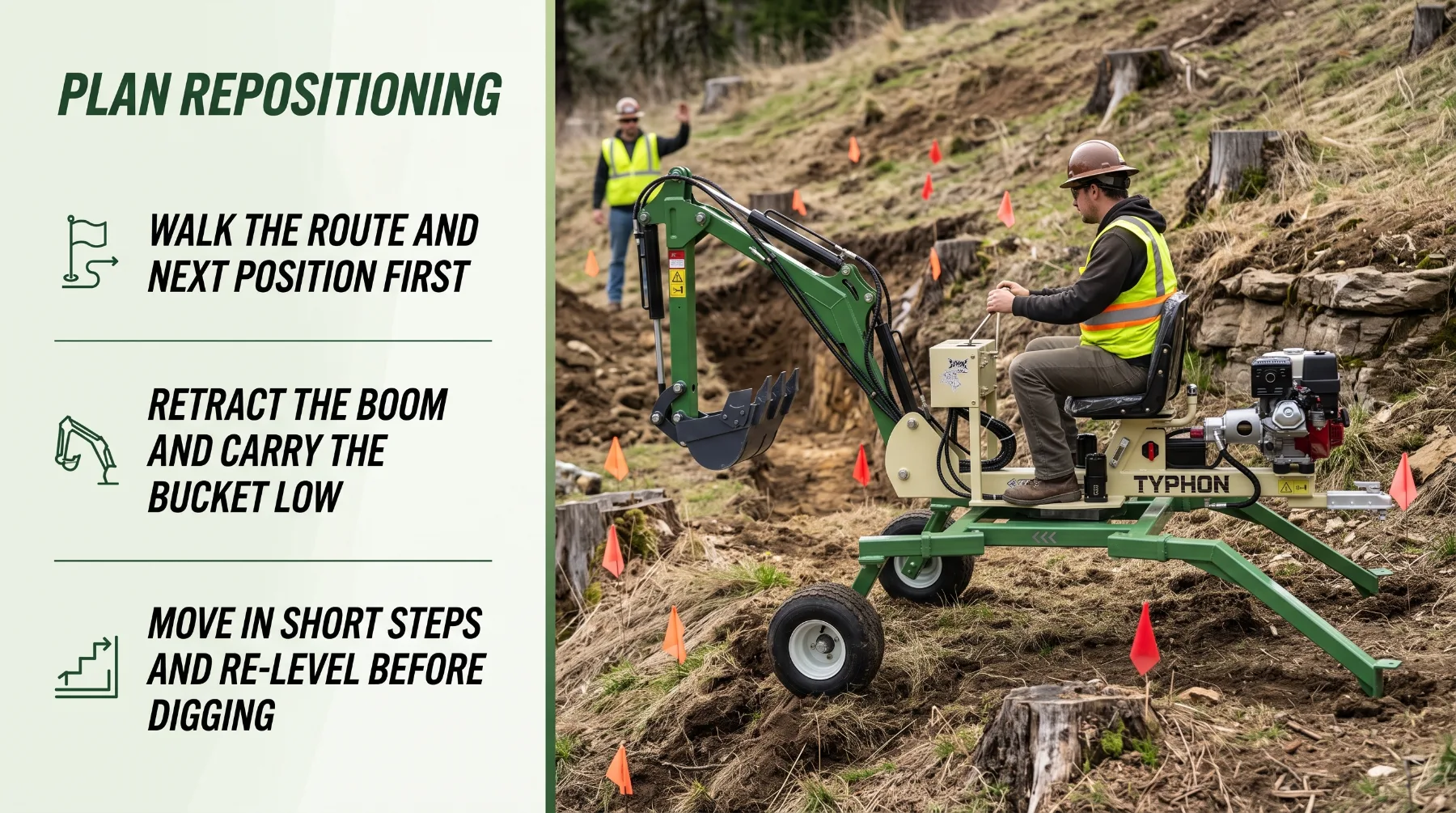
Uneven sites often require a spider mini excavator to move between several working positions as trenches follow slopes, elevations change, or obstacles limit access. Each repositioning creates additional risk because the machine's supports and weight distribution change during the move. Before leaving a stable setup, identify the next working position, walk the route, and check the ground, edges, obstacles, and slope. Retract the boom, carry the bucket low, and position it as recommended by the manufacturer. Follow the specified travel direction and slope limits, move in short and controlled steps, and shift supports only as directed by the operating procedure. Check each new support point before transferring weight, then re-level the machine and confirm stability before resuming excavation.
Limit repositioning to what is necessary because frequent moves increase work time and exposure to unstable ground. Plan each working position so as much excavation as possible can be completed from one setup. Use a spotter when visibility is restricted or the route includes difficult terrain, and establish hand signals or radio communication before moving. If a support slips or the machine shifts unexpectedly, stop immediately, lower the bucket, and reassess the position before continuing. Recording proven working positions on the site plan can also help organize the work and give the next operator useful information about stable setup locations.
Key takeaway: Plan each move before leaving a stable setup, assess the new ground conditions, and reposition carefully in controlled steps according to the machine's operating procedures.
Consider Ground Pressure
Ground pressure describes how the excavator's weight is transferred to the surface through its contact points, such as wheels, tracks, or support pads. Because a spider excavator may concentrate its weight over relatively small areas, pressure can become significant on soft or variable ground. This is especially important when the machine needs to crawl across uneven surfaces or climb slopes and embankments. Bedrock and solid ledges generally support heavy loads but may be sloped or slippery, while compacted soil usually provides stable support with limited settlement. Loose fill, silt, saturated soil, and organic topsoil can compress, shift, or allow supports to sink, especially when the surface hides weaker material. Ground loading also changes during operation. As the boom extends or swings, one or more supports may carry substantially more weight than when the attachment is close to the machine.
Place supports on the firmest available ground and use approved load-spreading pads when additional support is needed. Avoid fresh fill, saturated soil, and organic material whenever possible, and clear leaves or debris so the actual ground surface can be assessed. Watch the support points as working loads change and look for sinking, shifting, or increasing settlement. Recheck the supports during breaks, after rain, and whenever excavation moves closer to a support point. Continuous ground assessment helps maintain stable support as both site conditions and machine loading change.
Key takeaway: The machine's contact points determine how its weight reaches the surface, so position carefully on soft soil, use approved pads where needed, and evaluate ground conditions throughout the work.
Watch the Excavation Area
Excavation changes the ground around a spider mini excavator because each bucket of material removed can affect how the surrounding soil supports the machine. A support that was safely positioned at the beginning of a dig may become too close to a new excavation edge as the work progresses. This is especially important near slopes, unstable soil, and excavation edges. Watch for cracks near supports or along the top of the excavation, crumbling soil, water entering from the sides or bottom, settlement beneath a support, and loose rock shifting on nearby slopes. Plan the excavation so supports remain a safe distance from the edge, and where practical, work away from the machine rather than removing soil beneath it. On slopes, follow the project's engineering requirements for excavation sequence and avoid removing material from the base without understanding its effect on stability above.
Spoil piles should be kept back from excavation edges so they do not add unnecessary loading or slide back into the work area. Monitor the ground continuously as digging progresses and stop if conditions become unstable or unexpected movement occurs. Keep workers outside the excavator's swing radius and away from areas below machines operating on slopes. Follow applicable trench protection requirements as excavation depth increases, and never allow anyone to enter an excavation without the required protection. Following the project requirements, site-specific engineering guidance, and the machine's operating limits helps reduce the risk of ground movement as the excavation changes.
Key takeaway: Digging changes the ground around the machine, so monitor how nearby slopes, edges, and soil respond, and keep supports a safe distance from the excavation.
Conclusion
A spider excavator can support controlled excavation on uneven or sloped ground when terrain, support positioning, ground pressure, and machine movement are carefully managed. Before operation, contractors should assess each working position and travel route for slopes, soft or saturated soil, voids, loose rock, drop-offs, and other hazards, while confirming the manufacturer's slope limits and support procedures. Support legs and load-spreading pads should be positioned on firm ground within the machine's operating limits, with supports kept clear of fresh excavation edges where cracks, settlement, or ground movement could affect stability. Hydraulic hoses, fittings, legs, cylinders, wheels or tracks, and pivot points should be inspected before work, while inclination indicators, alarms, and emergency controls should be tested. Operators should use gradual movements, keep loads close to the machine, plan repositioning routes in advance, and recheck support conditions after breaks or changing weather. Marking the working and swing areas, maintaining clear separation from workers, and placing spoil on stable ground away from excavation edges helps support controlled and productive excavation on challenging terrain.
Frequently Asked Questions
Can spider excavators work on uneven ground? Yes. Some spider excavators are designed for challenging terrain, including slopes, uneven surfaces, and irregular ground conditions. Their support legs can help position the machine on difficult terrain, but operation must remain within the manufacturer's specified slope, load, and stability limits. Proper machine positioning and ground assessment are still essential before digging or moving material.
Why is support positioning important? Proper support positioning helps establish a stable working platform on irregular terrain. Each support leg should be placed firmly on suitable ground and positioned according to the machine's operating requirements before digging begins. Uneven or poorly supported legs can affect machine stability and load distribution. Operators should reassess the supports whenever ground conditions or the machine's working position change.
Does ground type affect stability? Yes. Soft, loose, wet, or saturated ground can affect how the excavator transfers its weight and working forces to the surface. Ground that cannot adequately support the machine may cause the supports to sink or shift. Load-spreading pads or suitable support surfaces can help distribute pressure over a larger area. Operators should assess ground conditions and reposition the machine if the surface cannot provide adequate support.
Should the machine be repositioned frequently? Only when necessary and when the new position provides suitable stability and access. Before moving, operators should consider ground conditions, slope, support placement, and the machine's operating limits. After repositioning, all supports should be firmly established before digging resumes. Frequent unnecessary repositioning can increase setup time and introduce additional stability concerns, so planning the working position carefully can improve both safety and efficiency.
Equipment Guidance
Need help choosing equipment for your next job?
Contact KONSTRUCTZ support and get practical guidance before comparing machines, attachments, or jobsite requirements.Contact SupportReader Comments
Join the equipment discussion
Related Posts
No published comments yet.