
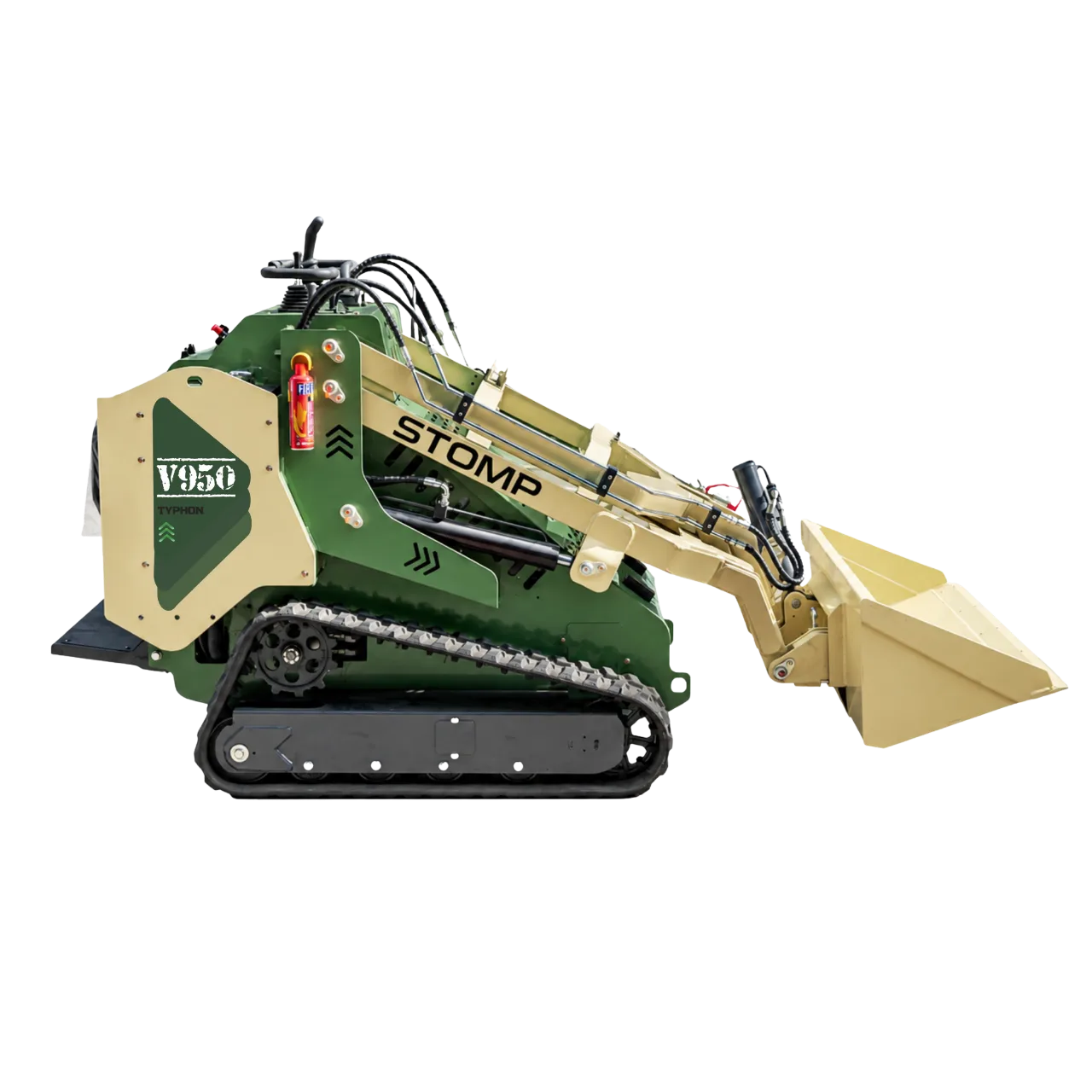

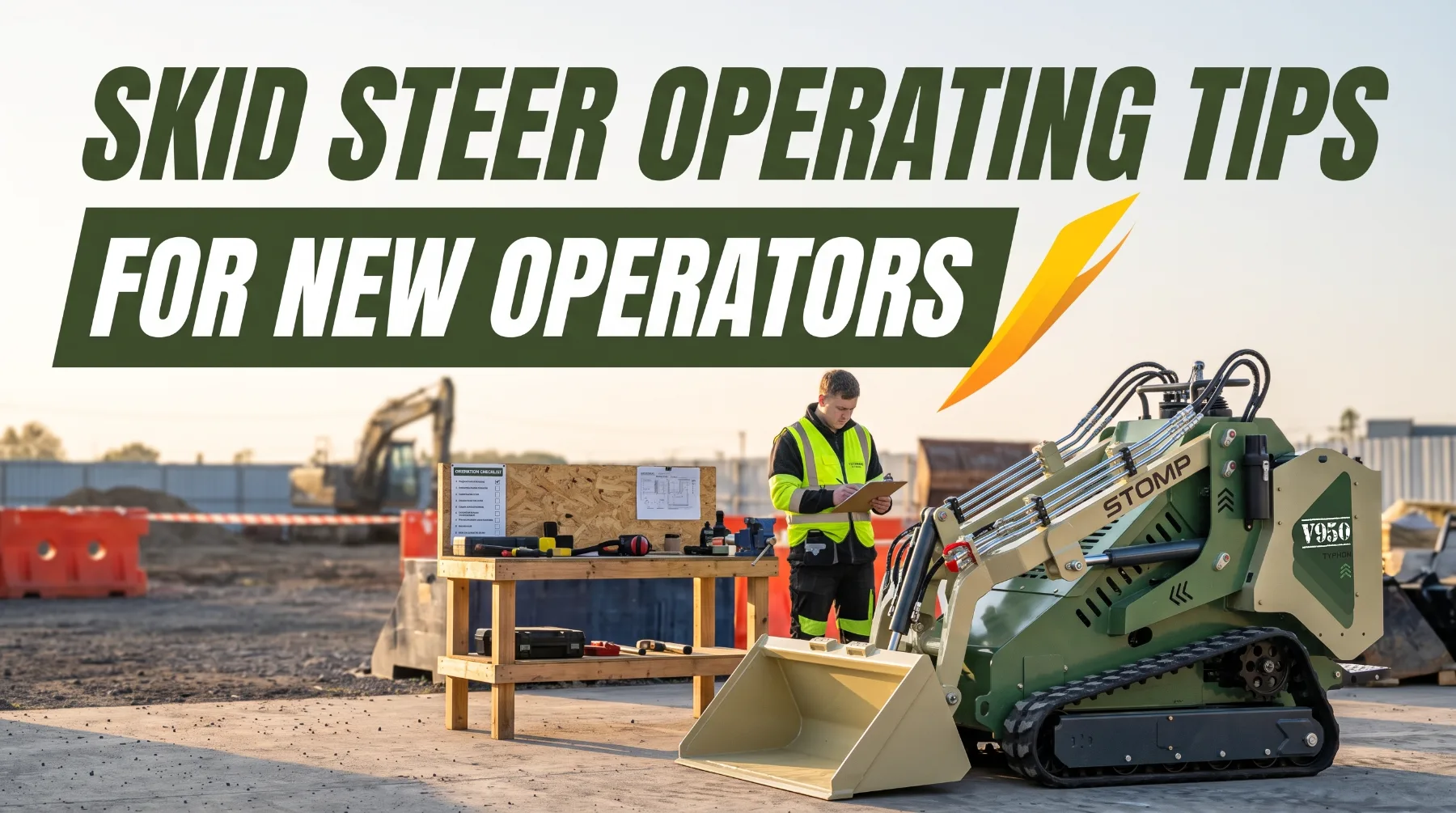
Starting work on a skid steer for the first time can seem straightforward when the machine is compact and easy to see around. Moving a pile of gravel across a busy site, however, can quickly reveal how responsive the controls are. A sudden input can make the bucket move sharply or cause the machine to pivot more quickly than expected, showing why its small size should not be mistaken for simple operation.
Compact dimensions do not reduce the need for careful control. Skid steers combine strong hydraulic power, quick response, and tight maneuverability in a relatively small frame, so every control input can have an immediate effect. Understanding how the drive controls, lift arms, bucket, and attachments respond helps an operator develop smoother and more predictable movements.
Before taking on productive work, learning the machine's basic operating procedures provides an important foundation. Familiarizing yourself with the controls, practicing gradual movements, checking the work area, and following the manufacturer's operating instructions can help build proper operating habits. Starting with the fundamentals makes it easier to handle the machine confidently while reducing avoidable operating mistakes.
Learn the Controls First
Before taking on any demanding task, get comfortable with how the machine responds. Every operator should become familiar with the full set of controls, because hesitation at the wrong moment creates risk. Spend time understanding travel, steering, lift-arm, attachment, and auxiliary hydraulic controls until each one feels predictable.
Each control does distinct work, and knowing them cold reduces the guesswork during operation. Travel and steering move and position the machine, the lift-arm raises and lowers, and the attachment and auxiliary hydraulic controls run the tool on the front. When these responses are second nature, you can focus on the task rather than the machine. That familiarity is the foundation everything else builds on.
Always review the manufacturer instructions before use. Every model can differ in control layout and response, so what you learned on one machine may not carry over exactly to another. Reading the guidance for the specific machine you're operating is a simple step that prevents avoidable surprises.
Key takeaway: Become familiar with the travel, steering, lift-arm, attachment, and auxiliary hydraulic controls, and review the manufacturer instructions, before performing demanding tasks.
Inspect the Machine Before Starting
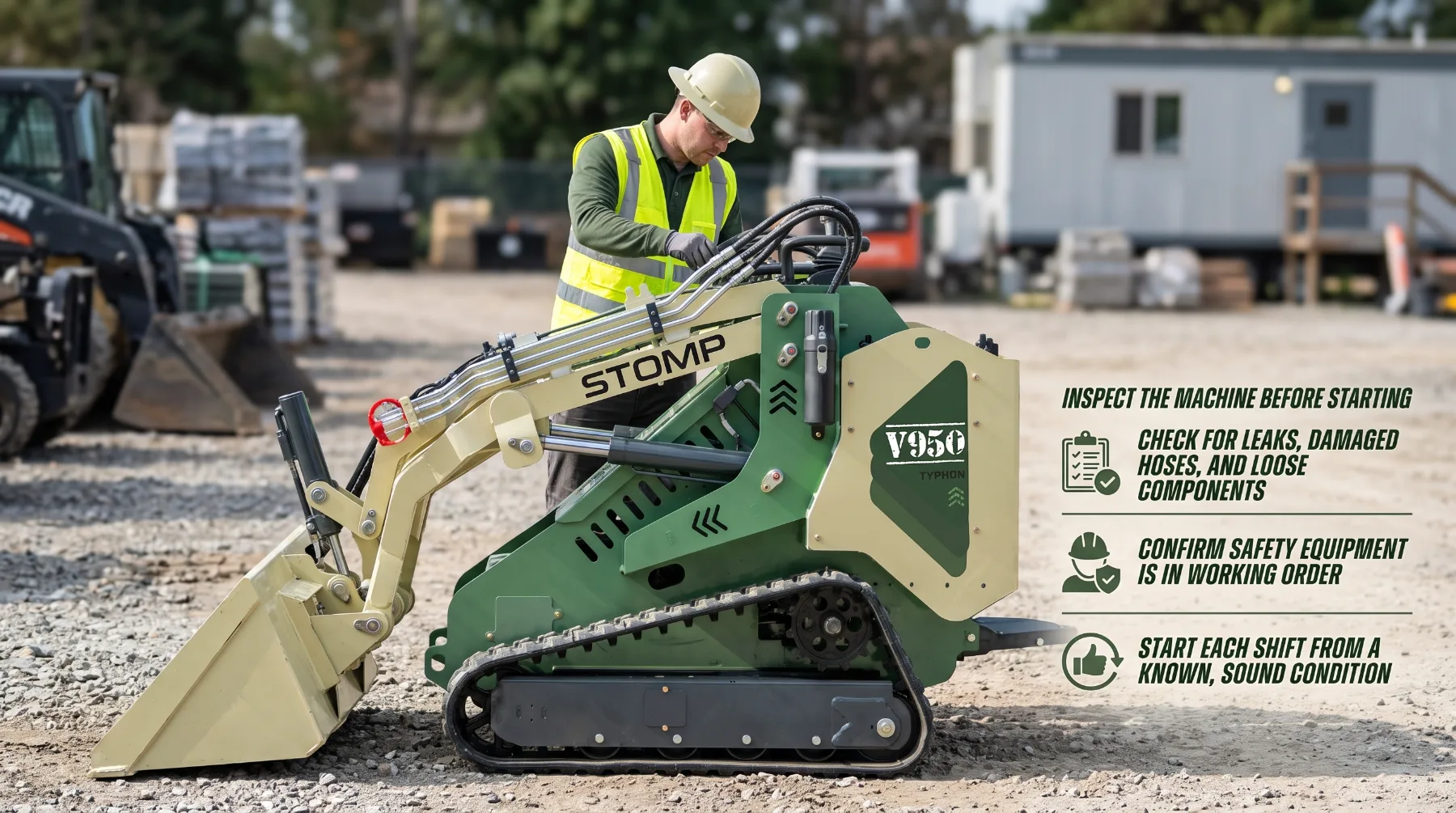
A quick, consistent inspection before each shift catches problems while they're still small. A thorough pre-operation check can reveal leaks, damaged hoses, worn tires or tracks, loose components, and other visible issues that would otherwise go unnoticed until they caused trouble. A few minutes here protects both the machine and the operator.
Don't stop at the mechanical components. Safety equipment should also be checked, confirming that the systems meant to protect you are in working order before the machine goes to work. A skid steer that runs but has a compromised safety feature isn't ready for the day, and finding that out mid-task is exactly what the inspection prevents.
Starting each shift from a known operating condition is what makes the rest of the day predictable. When you've confirmed the machine is sound, you can work without wondering whether a small fault is quietly developing beneath you. Making the inspection a firm habit, not an occasional one, is how reliable operation begins.
Key takeaway: Perform a pre-operation inspection for leaks, damaged hoses, worn tires or tracks, loose components, and safety equipment, so each shift starts from a known operating condition.
Keep the Load Low During Travel
How you carry a load while moving has a direct effect on safe operation. A raised bucket can reduce your visibility and affect the machine's stability, both of which matter the moment the machine is in motion. Traveling with a load held high is one of the more common mistakes new operators make.
Carrying the load low is the safer approach. Keeping the bucket or attachment low during travel helps maintain a more controlled position and reduces the height of the load, which supports stability and keeps your view of the path ahead clearer. The lower center of gravity makes the machine steadier as it moves, especially across uneven ground.
Follow the manufacturer's instructions for safe travel and load handling, since the guidance for a specific machine reflects how it's designed to be operated. Building the habit of lowering the load before traveling, every time, keeps both visibility and stability where they should be.
Key takeaway: A raised bucket reduces visibility and stability, so carry loads low during travel and follow the manufacturer's instructions for safe travel and load handling.
Understand Turning Behavior
Skid steers turn differently from conventional vehicles because the wheels or tracks on each side can be controlled independently. Changing the speed or direction between the two sides allows the machine to make tight turns and pivot within a small area, giving it strong maneuverability in confined spaces.
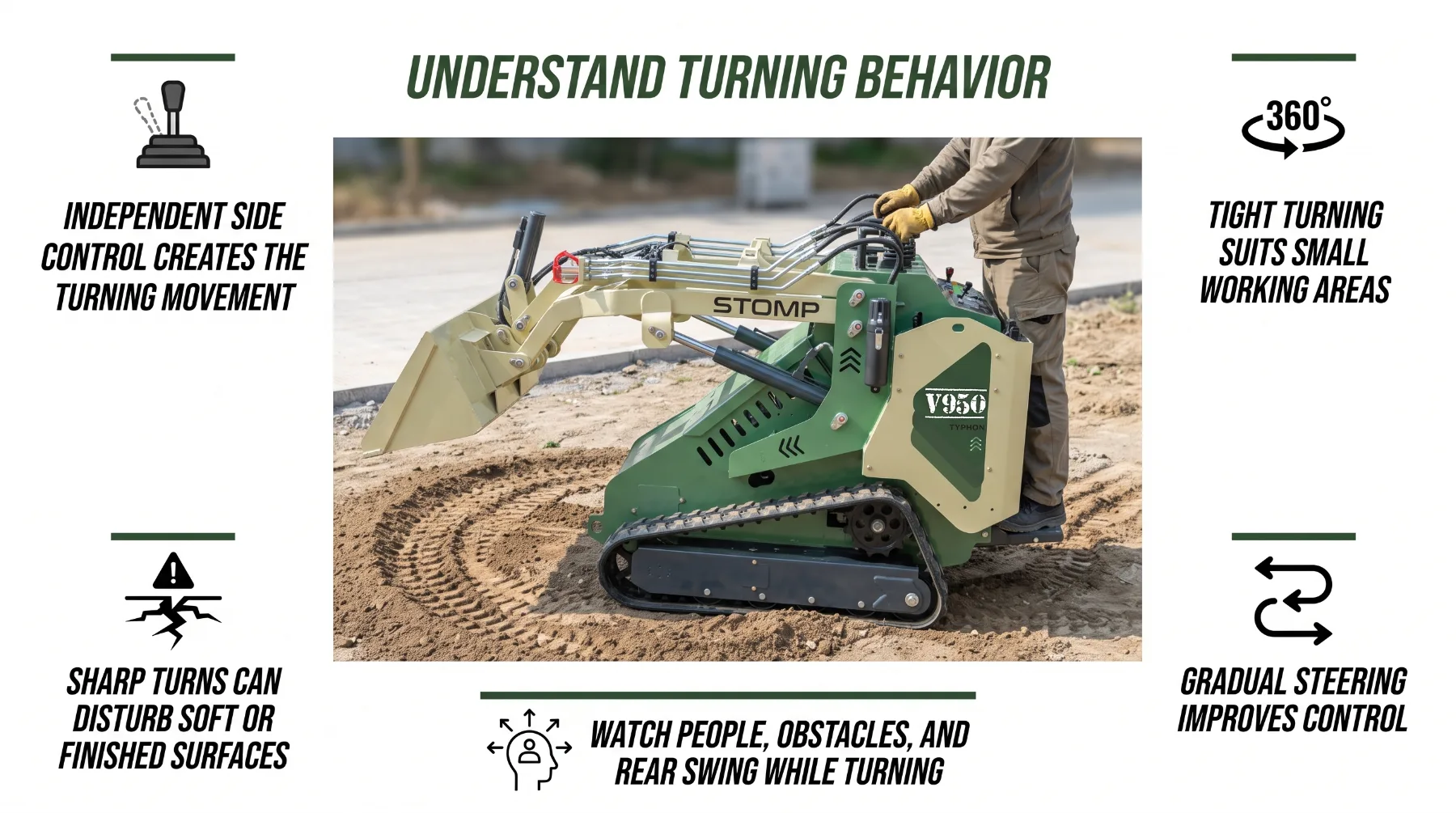
This steering method also requires careful operation because sharp turns can disturb the surface beneath the machine. Smooth, gradual movements are especially important on finished surfaces or soft ground. Operators should also remain aware of nearby people, structures, and the machine's rear swing while turning.
- Independent Side Control: Different wheel or track speeds on each side create the turning movement.
- Tight Turning: The skid-steer design allows the machine to maneuver within a small working area.
- Surface Disturbance: Sharp turns can scuff, tear, or disturb soft and finished surfaces.
- Smooth Operation: Gradual steering movements help improve control and reduce unnecessary ground disturbance.
- Surrounding Awareness: Operators should monitor people, structures, obstacles, and the machine's rear area during turns.
Key takeaway: Skid steers turn by varying wheel or track speed on each side, allowing tight maneuvering but causing ground disturbance, so practice smooth movements and watch nearby people, structures, and surfaces.
Use Attachments Correctly
A skid steer's versatility comes from its attachments, but each one behaves differently, and treating them all the same invites trouble. Different attachments have different hydraulic requirements and operating characteristics, so a tool that works one way gives no guarantee about how the next one will run.
Before using any attachment, understand three things: how it connects to the machine, what it's designed to do, and how it affects the machine's balance and your visibility. A secure, correct connection is essential for safe operation, the tool's purpose determines how you use it, and a heavier or larger attachment can shift the machine's balance and change what you can see ahead. Knowing these before you start work keeps operation controlled.
Never assume one attachment operates the same way as another. The safe approach is to treat each new attachment as something to learn, checking its requirements and getting a feel for its behavior before putting it to demanding work. That habit protects both the operation and everyone around the machine.
Key takeaway: Attachments have different hydraulic requirements and operating characteristics, so understand how each one connects, what it does, and how it affects balance and visibility, and never assume one operates like another.
Watch the Work Area
Operating safely depends as much on what's around the machine as on the machine itself. Good visibility is essential when moving and working around a busy jobsite, where workers, equipment, and obstacles can all be in motion at once. Staying aware of the full work area is a constant part of the job, not a one-time check.
Make active awareness a habit. Check your blind spots, keep track of workers and obstacles as they move, and use the available mirrors, cameras, alarms, or spotters as appropriate for the situation. These tools exist to extend what you can see and hear, and using them consistently closes the gaps that a skid steer's sightlines leave open, particularly to the rear and sides.
Communication becomes especially important in congested areas. When the site is tight and busy, clear signals between the operator and the people on the ground, often through a spotter, keep everyone coordinated and safe. Never assume others have seen you or know your next move; confirm it. Working with steady awareness and good communication is what keeps a busy site running without incident.
Key takeaway: Maintain good visibility by checking blind spots, staying aware of workers and obstacles, and using mirrors, cameras, alarms, or spotters, with communication especially important in congested areas.
Conclusion
Operating a skid steer safely starts with understanding its controls, capabilities, attachments, and operating environment before demanding work begins. Operators should review the manufacturer's instructions, complete a pre-operation inspection for leaks, damaged hoses, worn tires or tracks, loose components, and safety equipment, and become familiar with travel, steering, lift-arm, attachment, and auxiliary hydraulic controls. Loads should be carried low during travel to maintain visibility and stability, while turns should be smooth and planned to limit ground disturbance and maintain clearance from people and structures. Each attachment requires attention to its connection, operating requirements, balance effects, and visibility limitations, while blind spots and congested areas require careful observation, clear communication, and a spotter when necessary. Practicing these procedures in a suitable area before entering an active jobsite helps build consistent operating habits and supports safe, controlled, and productive skid steer operation.
Frequently Asked Questions
What should a new skid steer operator learn first? A new operator should first learn the controls, safety systems, operating limits, and basic travel procedures. This includes understanding steering, lift arms, attachments, and auxiliary hydraulics, along with how different attachments affect balance and visibility. Review the manufacturer's instructions for the specific machine and practice in a suitable training area before working on a busy jobsite. Building familiarity with the controls and machine response first helps develop safe, consistent operation.
Why should loads stay low during travel? Keeping loads low helps maintain stability and visibility during travel. Raising a bucket or attachment increases the machine's center of gravity and can block the operator's view of the travel path. These effects become more important on uneven or sloped ground. Lower the attachment to the manufacturer's recommended travel position before moving, and follow the machine's load-handling and travel requirements.
Can skid steers turn in tight spaces? Yes. Skid steers can make tight turns by controlling the wheels or tracks on each side independently, allowing the machine to pivot within a small area. However, sharp turns can scuff or damage soft, finished, or sensitive surfaces. The machine can also move close to nearby people or obstacles quickly, so new operators should practice smooth turns and maintain awareness of the surrounding area.
Should new operators practice before working on a busy site? Yes. New operators should practice in a suitable open area before working around people, equipment, and obstacles on a busy jobsite. Practice should cover travel, steering, lift-arm, attachment, and auxiliary hydraulic controls, along with turning and handling loads. This builds familiarity with the machine's response so the operator can focus more effectively on the work area and surrounding hazards once on site.
Equipment Guidance
Need help choosing equipment for your next job?
Contact KONSTRUCTZ support and get practical guidance before comparing machines, attachments, or jobsite requirements.Contact SupportReader Comments
Join the equipment discussion
Related Posts
No published comments yet.