

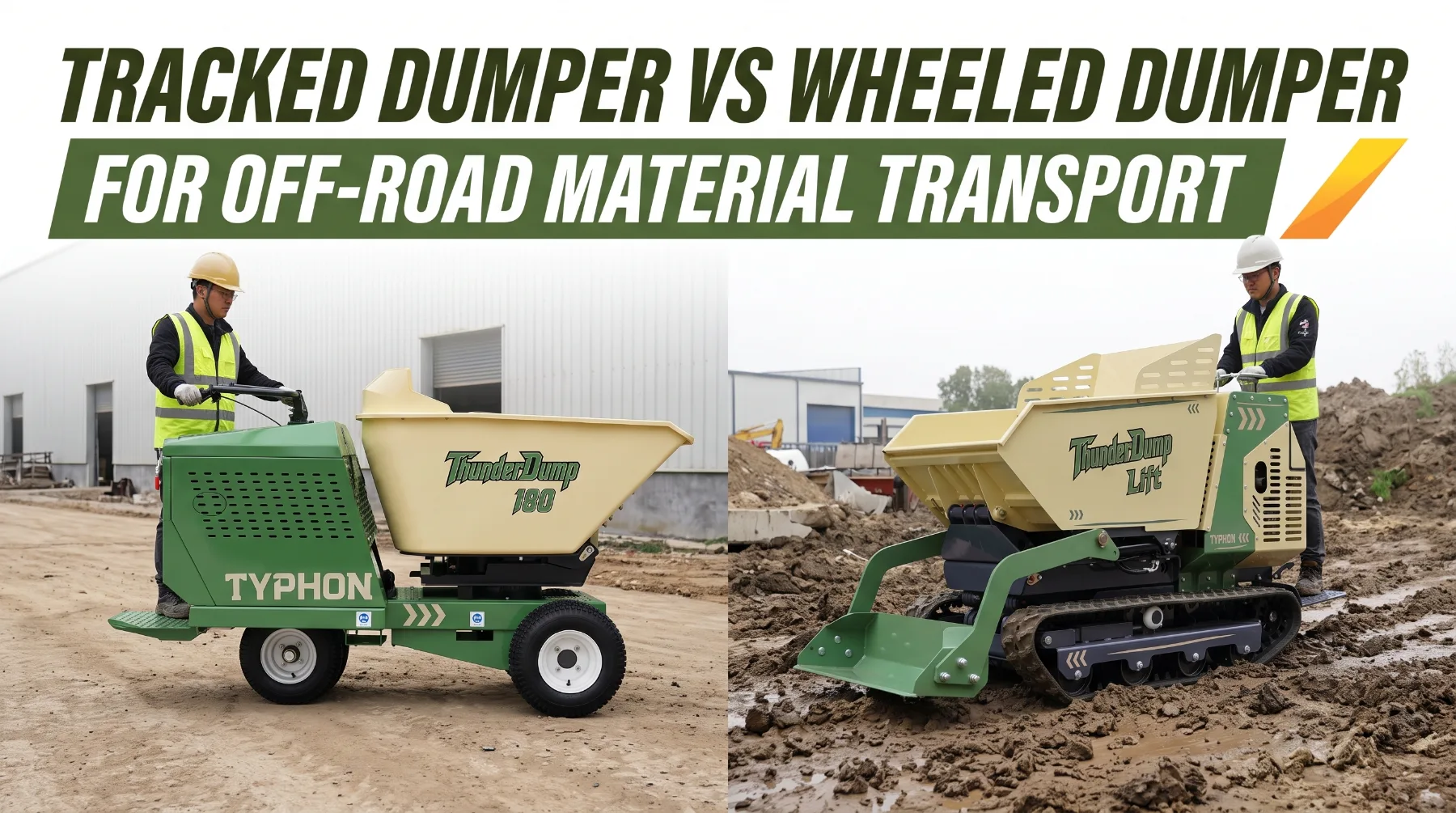
Moving material across a mixed jobsite can involve several different ground conditions in the same workday. One section may have firm, compacted soil, while another passes through a muddy low spot or rough, uneven terrain. Soil, rock, gravel, and construction debris still need to move between loading and dumping areas, so the hauling machine must handle the route without creating unnecessary delays.
Tracked and wheeled dumpers approach these conditions differently because their running gear interacts with the ground in different ways. Track systems spread the machine's weight across a larger contact area, which can help when working on softer or uneven surfaces. Wheeled designs can provide faster travel and easier maneuverability on firm ground, making them well suited to established haul routes and hard surfaces.
Choosing between the two starts with looking closely at the conditions the machine will face throughout the work cycle. Ground firmness, slopes, mud, travel distance, maneuverability, and expected load all influence which configuration fits the site. Matching the dumper to the terrain can make material transport more predictable and help the machine work efficiently across changing conditions.
Ground Contact Changes Performance
The core difference between the two designs comes down to how each one meets the ground. Tracks distribute the machine's weight across a larger contact area, spreading the load along their full length rather than concentrating it. That broader footprint is what gives a tracked machine its advantage on soft or uneven ground, where staying on top of the surface matters.
Wheels work differently. They concentrate contact through individual tires, which lets a wheeled machine roll efficiently across firmer surfaces where a smaller footprint isn't a disadvantage. On hard, prepared ground, that concentrated contact translates into easy, efficient travel. Because the two designs behave so differently depending on what's underfoot, ground condition becomes one of the first things to weigh when comparing them.
Key takeaway: Tracks spread weight across a larger contact area for soft or uneven ground, while wheels concentrate contact through tires for efficient travel on firmer surfaces, so ground condition is a central factor in the comparison.
Tracks Suit Difficult Terrain
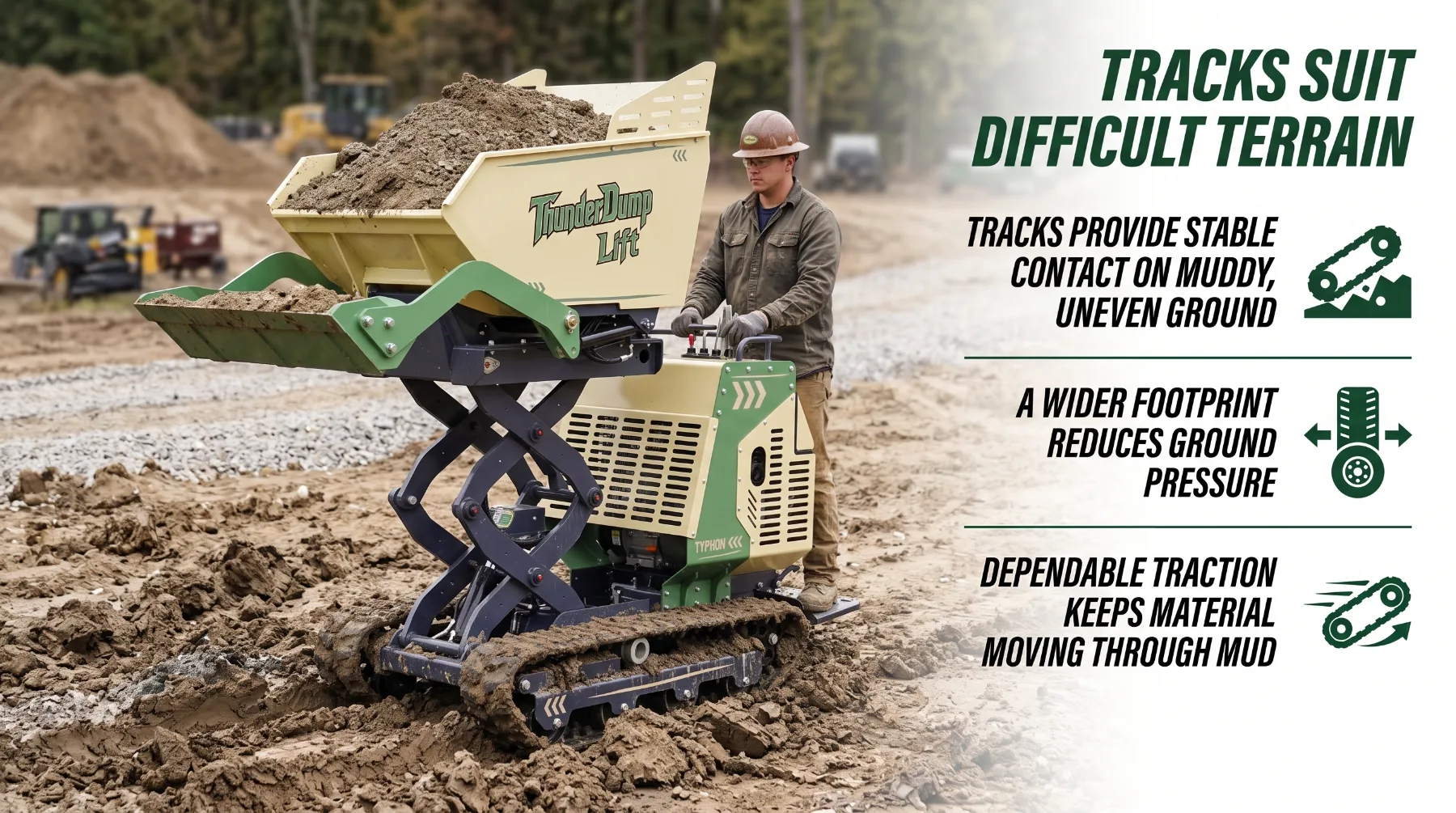
When the ground turns challenging, a tracked dumper comes into its own. Tracks provide stable ground contact on muddy, loose, or uneven surfaces, keeping a steady footing where conditions would otherwise slow the work. That stability is the reason tracked machines are so often considered for demanding sites.
The larger footprint does two things at once. By spreading the machine's weight over more ground, it helps reduce ground pressure, which keeps the machine on top of soft surfaces rather than sinking into them. That same footprint improves movement where tires might struggle to maintain traction, letting the machine keep hauling through mud, loose fill, or broken ground. For jobs where the terrain is the main obstacle, that combination of low ground pressure and dependable traction is exactly what keeps material moving.
Key takeaway: Tracked dumpers deliver stable contact on muddy, loose, and uneven ground, using a larger footprint to reduce ground pressure and maintain traction where tires may struggle.
Wheels Support Faster Travel
On firm ground, a wheeled dumper earns its place through efficiency. Wheeled machines travel efficiently across firm surfaces and prepared construction routes, where tires roll easily over hard ground with little resistance. That easy rolling is a genuine productivity advantage on the right site.
The benefit shows up most clearly over repeated trips. When the route between loading and dumping areas is firm and established, a wheeled dumper can cycle back and forth quickly, making run after run practical throughout the day. Site layout and travel distance strongly influence how much this matters: on a large site with long, prepared haul routes, efficient travel adds up to real time saved across a shift. Where the ground supports it, that speed keeps the whole operation moving at a productive pace.
Key takeaway: Wheeled dumpers travel efficiently across firm and prepared surfaces, making repeated trips between loading and dumping areas practical, with site layout and travel distance shaping how valuable that speed becomes.
Maneuverability Depends on the Site
A dumper's maneuverability depends on the working environment, not just its traction. Machine dimensions, turning behavior, route conditions, and available space all affect how easily material can be transported. A machine that works well across open ground may be less practical in tight or restricted areas.
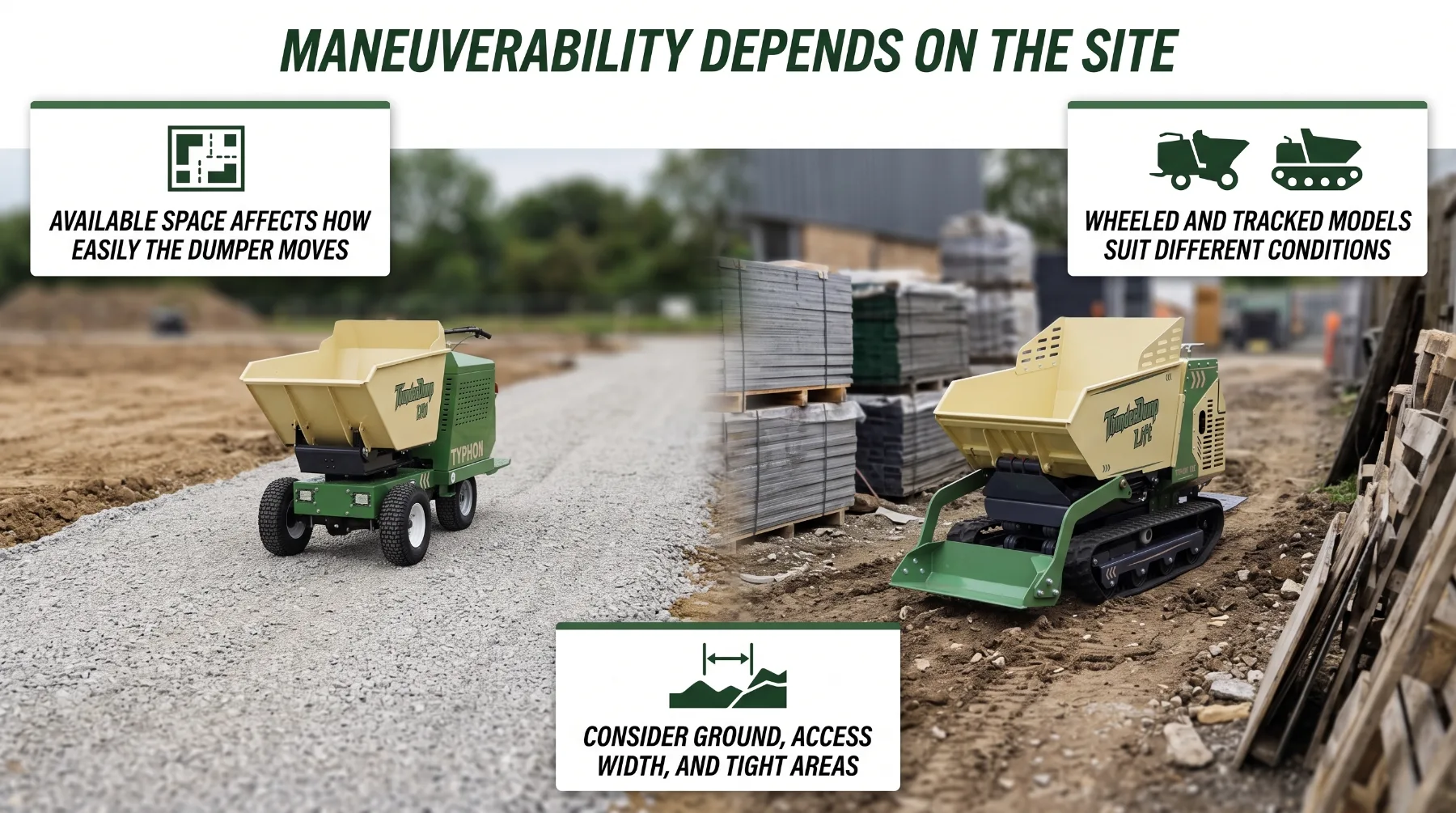
Wheeled and tracked dumpers can suit different site layouts. Wheeled models can work efficiently on open routes with enough room to travel and turn, while compact tracked machines can provide useful access and traction in tighter or less prepared areas.
- Site Layout: Available working and travel space affects how easily the dumper can move.
- Machine Type: Wheeled and tracked dumpers offer different maneuverability characteristics for different conditions.
- Route Conditions: Ground surface, access width, and tight areas should all be considered when selecting the right dumper.
Key takeaway: Turning behavior, machine dimensions, and available space all affect transport, so wheeled dumpers suit open routes while compact tracked machines offer traction in tighter or less prepared areas.
Payload Still Matters
Ground type is only one part of the picture, and focusing on it alone can lead to a machine that handles the terrain but not the work. Payload capacity, dump height, body size, and loading requirements all deserve equal attention when comparing dumpers, because these determine how effectively the machine actually moves your material.
The goal is a machine that carries the intended material efficiently without exceeding its rated operating limits. Body size and payload capacity should suit the volume and weight of what you're hauling, dump height needs to match where the material has to go, and loading requirements should fit the equipment feeding the dumper. A machine that's well matched to the terrain but too small for the material forces extra trips, while one loaded beyond its limits compromises both performance and safety. Weighing these hauling factors alongside the ground conditions is what produces a genuinely suitable choice.
Key takeaway: Beyond ground type, payload capacity, dump height, body size, and loading requirements all matter, and the machine must carry the intended material efficiently without exceeding its rated operating limits.
Match the Dumper to the Route
Few construction sites offer a single, consistent ground condition. A project often combines paved access roads, stretches of compacted soil, muddy sections, and patches of rough ground, all within the same haul route. That mix is exactly why the choice between tracks and wheels can't rest on one part of the site alone.
The reliable approach is to evaluate the complete travel route from loading point to dumping area, accounting for every surface the machine will cross. Look at where the ground is firm and where it turns soft, where the route runs open and where it tightens, and how far the material has to travel overall. Weighing the full journey, rather than the easiest or the hardest section in isolation, helps you determine whether wheels or tracks better suit the job as a whole. The best machine is the one that handles the entire route dependably, not just its most forgiving stretch.
Key takeaway: Sites often combine paved, compacted, muddy, and rough ground, so evaluating the complete travel route helps determine whether wheels or tracks better suit the job overall.
Conclusion
Tracked and wheeled dumpers interact differently with the ground, so their suitability depends on terrain, travel distance, site space, payload, and the complete haul route. Tracks distribute machine weight across a broader contact area, helping reduce ground pressure and maintain traction on soft, muddy, loose, or uneven surfaces, while wheels can travel efficiently across firm, prepared routes and support repeated or longer hauls. Maneuverability also depends on machine dimensions, steering, turning space, and site layout, while payload capacity, body size, dump height, and loading requirements must match the material and surrounding equipment without exceeding rated limits. Evaluating every section of the travel route, from rough or poorly prepared ground to open firm surfaces, helps identify the traction and travel requirements of the job. Matching the dumper's ground-contact system, dimensions, payload capacity, and operating limits to the full route supports efficient and reliable off-road material transport.
Frequently Asked Questions
Are tracked dumpers better on soft ground? Tracked dumpers tend to perform well on soft ground because their tracks spread the machine's weight over a larger contact area. This reduces ground pressure and helps prevent sinking on muddy, loose, or soft surfaces. The larger footprint also provides traction where tires may struggle. However, the better configuration depends on the full route. Firm, prepared surfaces and long travel distances may favor wheels, so consider the complete site rather than soft ground alone.
When are wheeled dumpers useful? Wheeled dumpers are useful on firm, prepared surfaces where tires can roll efficiently with less resistance. This can be valuable for repeated trips between loading and dumping areas, especially along established haul routes. They also suit open sites where there is enough room to travel and turn. On soft, muddy, or loose ground, however, tires may lose traction, making tracked configurations more suitable.
Which dumper is better for rough terrain? The suitable dumper depends on the terrain, slopes, traction requirements, payload, and overall route. Rough or uneven ground often suits tracked dumpers because their larger footprint provides stable contact and traction on loose surfaces. However, many sites combine rough sections with firm, prepared routes where wheeled machines may work efficiently. Evaluate the entire travel route and consider terrain, payload, and traction requirements together.
Does payload capacity matter when comparing dumpers? Yes. Payload capacity should be considered alongside terrain, body size, dump height, and loading requirements. The dumper should carry the required material efficiently without exceeding its rated limits. A machine that is too small may require extra trips, while the dump height must suit the receiving area and the loading system should match the equipment feeding it. Comparing these factors together helps match the dumper to the material and hauling cycle.
Equipment Guidance
Need help choosing equipment for your next job?
Contact KONSTRUCTZ support and get practical guidance before comparing machines, attachments, or jobsite requirements.Contact SupportReader Comments
Join the equipment discussion
Related Posts
No published comments yet.