
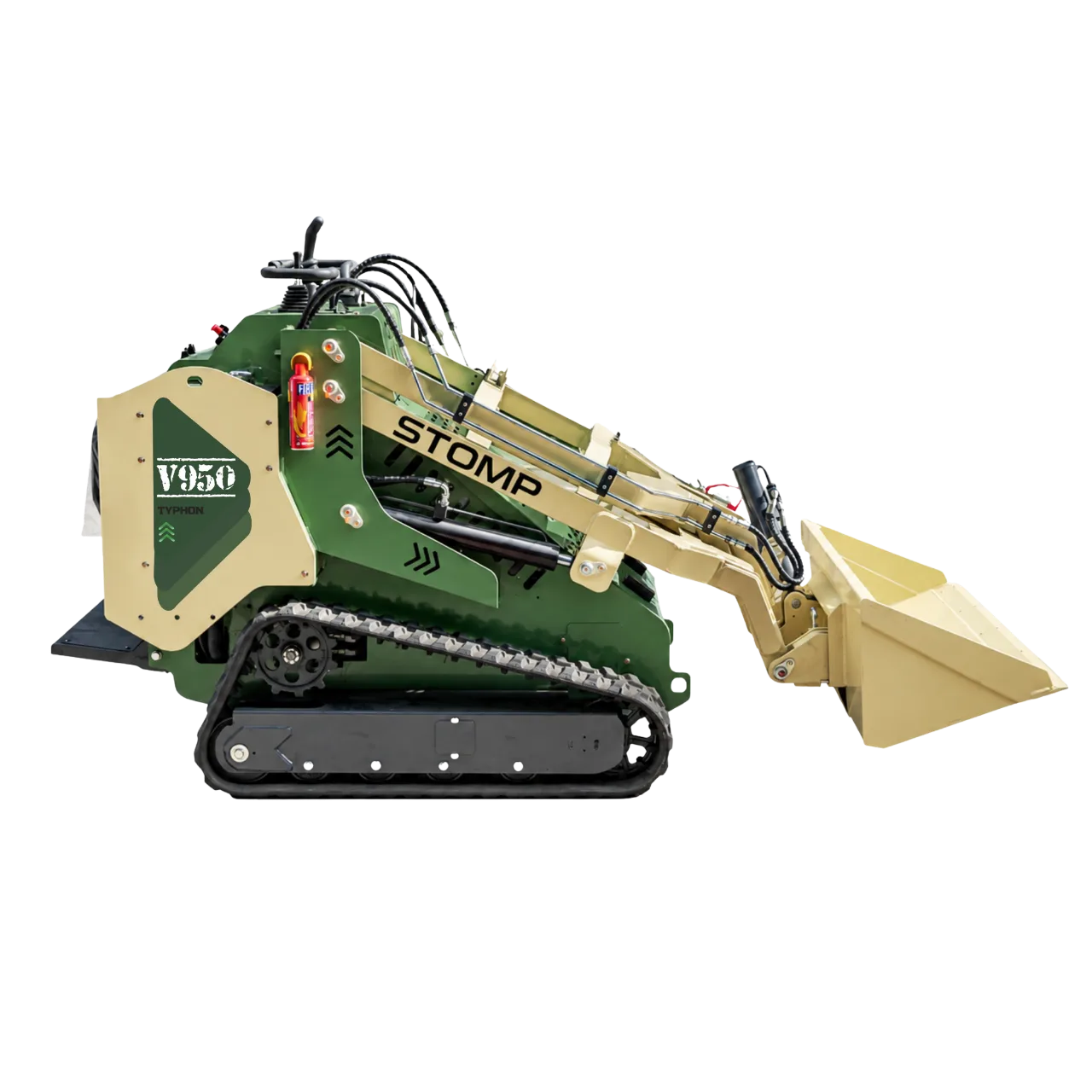

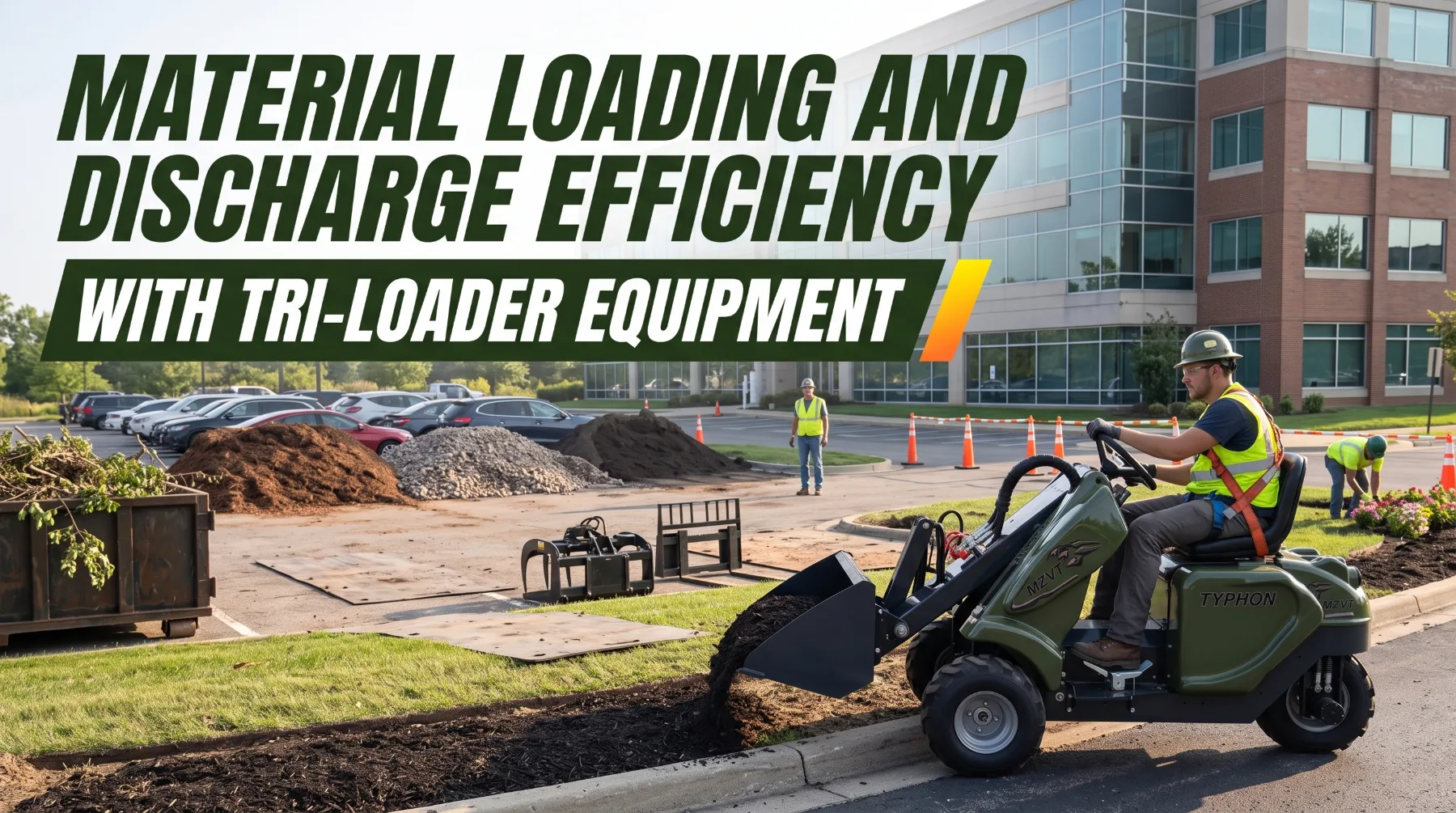
Material handling efficiency matters when tri-loaders move mulch, river rock, topsoil, and brush across landscaping or construction sites. Using one general-purpose bucket for every task can increase travel cycles, cause material spillage, and make cleanup more time-consuming. Matching the attachment to each material helps operators complete more work while keeping walkways, lawns, and drive lanes clear.
Attachment design and material density both affect loading performance. A light-material bucket can carry bulky mulch efficiently, while a grapple secures branches and loose debris during transport. Dense materials such as river rock require careful load sizing to stay within the machine's rated capacity and maintain stability. Smooth hydraulic movements and a properly maintained quick coupler also support reliable attachment changes and controlled handling.
Efficient workflow starts by positioning stockpiles near work areas where site conditions and access rules allow. Operators should travel with loads kept low, reduce speed on uneven routes, and discharge materials gradually to prevent spills and damage to finished surfaces. Cleaning and greasing the coupler, checking attachment locks, and following routine maintenance schedules help reduce downtime and keep each material-handling cycle productive.
Load Weight and Transport Efficiency
Material density determines how much a tri-loader can carry safely in each cycle. Two buckets of the same size can hold very different weights. A full bucket of dense aggregate, wet topsoil, sand, or broken concrete may weigh several times as much as the same volume of mulch or wood chips. The machine's limit is based on weight, not volume, so load size must account for what the material actually weighs.
Every tri-loader has a rated operating capacity, listed on the capacity decal and in the operator's manual. That figure includes the weight of the attachment. Estimate each load using the material's approximate density, and allow for moisture. Topsoil and sand gain significant weight after rain, and a load that was within capacity on a dry morning may exceed it by afternoon. When you're unsure, start with a smaller load and watch how the machine responds.
Overloading doesn't improve transport efficiency. A load near or beyond capacity lifts slowly, steers poorly, and reduces stability on uneven ground. It increases spillage over bumps, wears tires and loader components faster, and shrinks the safety margin at the moment the operator needs it most. Time spent cleaning up spilled material or recovering from an unsettled machine quickly cancels any gain from a larger load.
The most efficient load is the largest one the machine can carry with full control over the route ahead. On a smooth, level path, that may be a full bucket of light material or a measured partial load of dense stone. On a rough or sloped route, a slightly smaller load keeps travel steady and often raises hourly output. Signs that a load is too heavy include a light feeling at the rear, slow lifting, and heavy bouncing during travel. Reduce the load before the next trip whenever these appear.
Key takeaway: Dense materials reach weight limits far sooner than light materials of the same volume, so estimate loads by weight, account for moisture and attachment weight, and size each load for controlled travel.
Travel Distance and Worksite Layout
The distance between loading and discharge points has a direct effect on cycle time. Every foot the machine travels adds to each trip, and on a long route, travel can make up most of the cycle. A logical worksite layout shortens those trips and lets the tri-loader complete more useful work during a shift.
Plan material placement before deliveries arrive. Where the site and property owner allow, stage stockpiles as close as practical to the areas where the material will be used. On larger properties, a single drop point may force long round trips. In those cases, consider whether a satellite stockpile near distant work areas, or a second delivery location, would shorten the route. Keep different materials in separate piles so they don't mix, and place them on firm, level ground away from walkways, drive lanes, and building entrances.
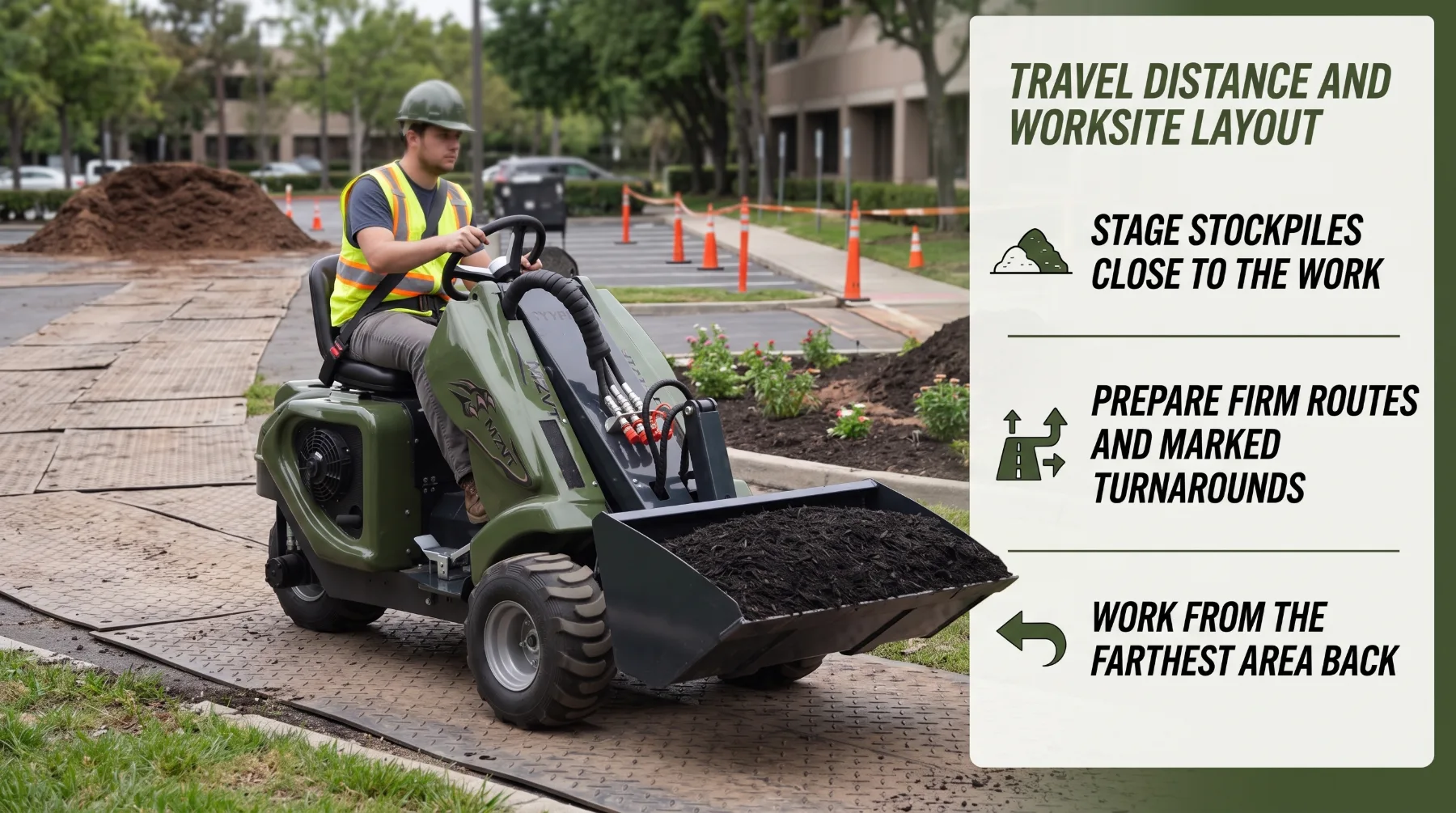
Prepare the travel route itself. Choose the shortest practical path between the stockpile and the discharge points. Fill ruts and holes, clear debris, and lay ground protection mats across lawns, soft ground, and finished surfaces. A firm, clear route allows steady travel without hard braking or bouncing, which protects both the load and the surface beneath it. Recheck the route during the day, since rain and repeated trips can soften or rut a path that started firm.
Turnaround space matters as much as distance. Mark clear turnaround areas at each end of the route so the machine doesn't need long reversing moves, which are slower and carry more risk. On occupied properties, separate machine routes from pedestrian walkways with barriers or cones where possible, and coordinate with the property manager on timing around peak foot and vehicle traffic.
Sequence the work to reduce wasted movement. Start placing material in the farthest areas and work back toward the stockpile or access point. That keeps the machine off finished beds and fresh surfaces and shortens the remaining trips as the job progresses.
Key takeaway: Positioning stockpiles, delivery areas, and unloading locations logically, preparing firm routes, and sequencing work from far to near reduce travel and help the tri-loader complete more work each shift.
Loading Technique and Bucket Fill
Efficient loading starts with how the machine approaches the material. A consistent, controlled technique fills the attachment quickly, keeps loads uniform, and protects the machine from unnecessary strain. Rushed or forced loading often does the opposite, adding time through spillage, tire spin, and repositioning.
Approach the pile squarely, with the machine straight and the bucket flat on the ground. Drive into the material at a steady, moderate speed rather than ramming it. As the bucket enters the pile, curl it back gradually and add a slight lift. This combination helps material roll into the bucket, improves fill, and reduces tire spin. Back out smoothly with the load carried low and the bucket curled back so material stays in place.
Work the pile face evenly. Taking material from the same spot repeatedly undercuts the pile, which can cause an overhang to collapse onto the machine or bucket. Loading from the base across the full face keeps the pile stable and each load consistent. On loose, dry material, a shallow approach often fills best. On compacted or sticky material, take smaller bites and let the bucket break the material loose instead of forcing a deep cut.
Avoid forcing the attachment into material it isn't designed to handle. Driving a light-material bucket into compacted gravel, or pushing pallet forks into loose soil, can bend components and stress the loader arms. If the machine stalls or the tires spin, back off and change the approach rather than applying more power.
Consistent fill matters as much as speed. Filling the bucket to the same level on every trip makes cycles predictable, simplifies production tracking, and keeps every load within safe limits. Never carry loads beyond the machine's rated capacity, even when the bucket has room for more.
Key takeaway: Approach the material squarely, use controlled bucket curl and lift, work the pile face evenly, and fill to a consistent level that stays within rated capacity.
Controlled Material Discharge
Controlled material discharge helps place loads accurately, reduce spillage, and minimize extra cleanup. A consistent routine improves efficiency while keeping the machine, operator, and nearby workers safe.
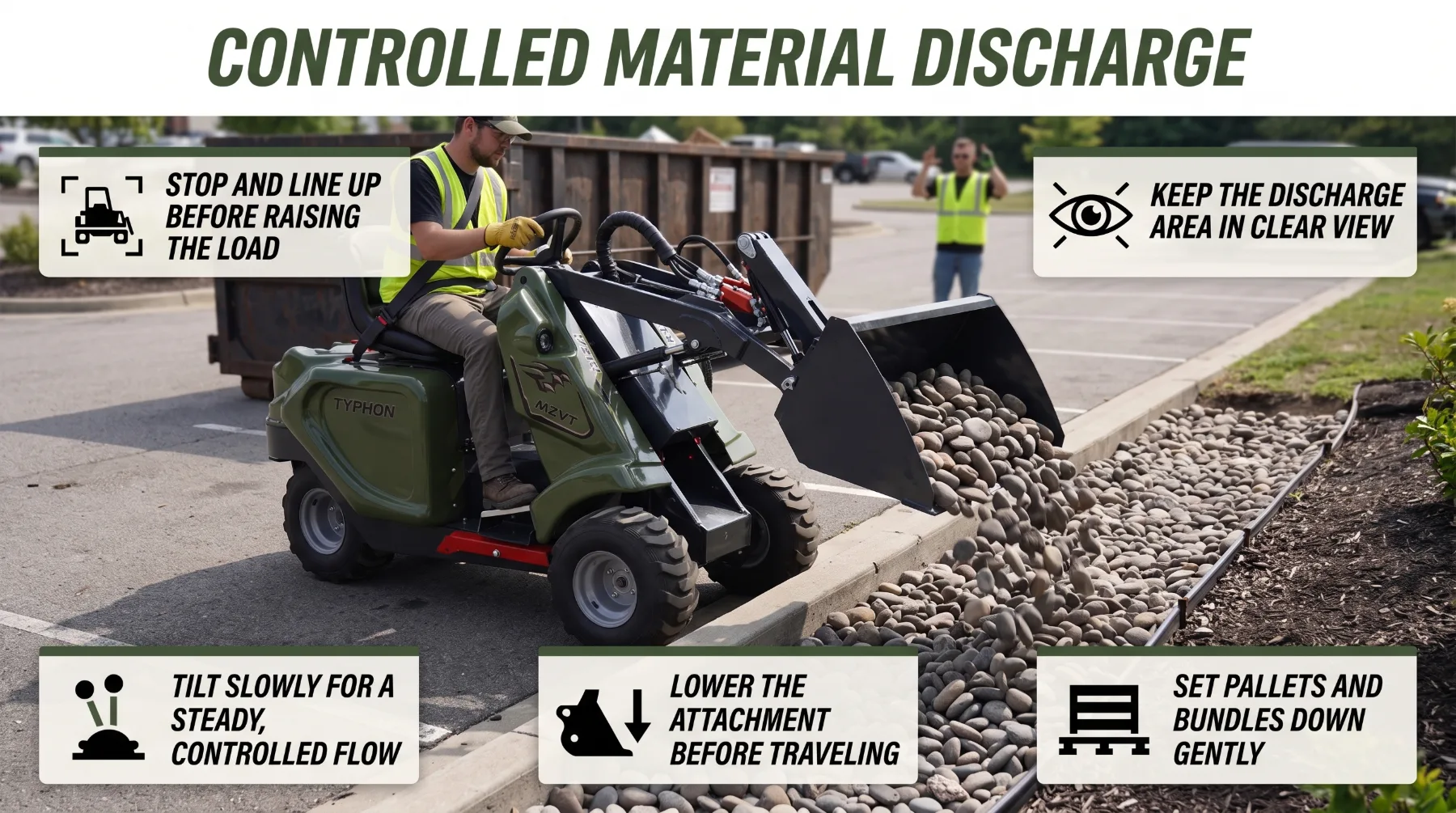
- Approach and Positioning: Follow a planned route, slow down, and stop in the correct position before raising the load. Keep loads low during travel.
- Visibility and Awareness: Keep windows, mirrors, and lights clean. Use a trained spotter when visibility is limited, and keep people clear of the discharge area.
- Smooth Material Release: Operate the hydraulics smoothly to prevent spillage and avoid unnecessary stress on the machine.
- Safe Load Placement: Discharge materials close to the ground when practical. Lower palletized loads gently and place grapple loads at the designated disposal point before releasing them.
- Attachment Reset and Departure: Return the attachment to a safe travel position, check the surroundings, and confirm the route is clear before moving away.
Key takeaway: Position the machine before raising the load, keep the discharge area in clear view, and use smooth hydraulic movements to place material accurately with minimal spillage.
Routine Maintenance and Productivity
A tri-loader can only sustain efficient cycles when it's in good working condition. Hydraulic systems, loader arms, pins, couplers, tires or tracks, and controls all affect handling performance. Small problems in any of these areas can slow lifting, complicate attachment changes, or compromise safe operation. Regular inspection catches wear and faults before they cut into productivity.
Begin each inspection with the machine on firm, level ground, the attachment lowered, the parking brake engaged, the engine off, and the key removed. Check the hydraulic fluid level and condition. Inspect hoses, fittings, and cylinders for leaks, abrasion, and damaged rods. Never check for hydraulic leaks by running your hand along a hose. Pressurized fluid can penetrate skin and cause serious injury, so use a piece of cardboard instead. Loader arms that drift down with the controls in neutral or respond slowly can point to a leak or worn seals, and they'll slow every lift until repaired.
Look over the loader arms, pivot points, and pins for cracks, looseness, and missing retainers. Grease every pivot according to the manufacturer's schedule, and more often during dusty or muddy work. Inspect the coupler and locking mechanism closely. Packed mulch, soil, and grit can keep a pin or wedge from seating fully, which slows attachment changes and creates a safety hazard. Clean the mounting plate before every change, and visually confirm full engagement before lifting a load.
Check tires for correct inflation, cuts, and uneven wear, or tracks for damage and correct tension. Ground-contact components affect traction, steering, and how smoothly a loaded machine travels. Test controls, brakes, the seat belt, lights, horn, and backup alarm, and confirm warning indicators clear after start-up.
Record findings and repairs in a maintenance log. Good records reveal recurring issues early and help you plan service around project schedules. A machine that's maintained on schedule finishes more cycles and spends less time waiting for repairs.
Key takeaway: Regular inspection of hydraulics, loader arms, pins, couplers, ground-contact components, and controls identifies wear before it slows loading cycles or compromises safe operation.
Conclusion
Tri-loader loading and discharge efficiency comes from coordinating several factors so that every cycle delivers useful work with as little wasted movement as possible. The right attachment for each material improves collection, keeps loads secure, and simplifies discharge, while a controlled loading technique produces consistent fills without forcing the machine. Sizing loads by weight rather than volume keeps dense materials within rated capacity and protects stability on the route. A logical worksite layout with nearby stockpiles, prepared travel paths, and clear turnaround areas shortens each trip. Smooth, well-positioned discharge places material exactly where it's needed and cuts down on cleanup, and routine maintenance keeps hydraulics, loader arms, couplers, and controls ready for a full day of dependable work. When these elements work together, a tri-loader moves more material with less effort, less spillage, and greater safety on every construction and property maintenance project. Before your next job, match your attachments to the day's materials, confirm load weights against the capacity decal, plan stockpile locations and travel routes, and complete a thorough pre-shift inspection so your first cycle is as efficient as your last.
Frequently Asked Questions
What improves tri-loader material-handling efficiency? Suitable attachments, efficient travel routes, appropriate load sizes, and smooth operation all help improve material-handling efficiency. Planning stockpile locations and organizing tasks from the farthest areas toward the nearest reduces unnecessary travel and repeated movements. Operators should also match their working speed to site conditions and avoid overloading the machine. These practices help shorten loading cycles, reduce material waste, and maintain steady productivity throughout the job.
Does material density affect loading? Yes. Dense materials reach the machine's weight limits much faster than lighter materials occupying the same volume. For example, a bucket filled with wet soil or crushed stone may weigh significantly more than one filled with dry, loose material. Operators should consider both material density and moisture content when estimating load size. Keeping each load within the manufacturer's rated limits helps maintain stability, protect components, and support safe material handling.
Why is discharge accuracy important? Accurate material placement reduces spillage, minimizes cleanup, and ensures materials are distributed where they are needed. Controlled discharge also helps prevent sudden load shifts that could affect machine balance, particularly when working on uneven ground or near obstacles. Operators should position the attachment carefully, maintain a stable machine stance, and lower materials smoothly rather than dropping them from excessive height. This approach helps protect the loader arms, attachment, and nearby surfaces.
How does maintenance affect productivity? Regular maintenance helps the tri-loader complete loading and transport cycles reliably. Hydraulic systems, loader arms, pivot points, couplers, tires or tracks, and attachments should be inspected for leaks, wear, loose connections, and damage. Worn components or reduced hydraulic performance can slow movement and make material handling less consistent. Addressing small problems early helps prevent unexpected breakdowns, reduce downtime, and keep the machine operating efficiently.
Equipment Guidance
Need help choosing equipment for your next job?
Contact KONSTRUCTZ support and get practical guidance before comparing machines, attachments, or jobsite requirements.Contact SupportReader Comments
Join the equipment discussion
Related Posts
No published comments yet.